11 Hydroxy THC
11-Hydroxy-THC: The Metabolite Behind Edibles | PatientsCann UK Skip to main content Back to Cannabinoids Guide 11-OH 11-Hydroxy-THC 11-OH-THC, 11-hydroxy-delta-9-THC pronounced: ih-LEV-uhn hy-DROK-see tet-ruh-hy-droh-kuh-NAB-ih-nol The stronger metabolite your liver makes from THC. It is the reason eaten cannabis can feel so much more intense. Metabolite (body-made)Formula: C21H30O3Intoxicating: Yes, stronger TypeMetabolite FormulaC21H30O3 IntoxicatingYes Key focusEdibles 11-Hydroxy-delta-9-THC · 330.5 g/mol The molecule Chemical structure This is the accurate skeletal structure of 11-hydroxy-THC, drawn from PubChem data. It is almost identical to THC, but your liver has added an oxygen and hydrogen (an -OH group) at one end. That tiny change makes it stronger. Its formula is C21H30O3 and it weighs 330.5 g/mol. Stronger than THCLong-lastingReaches brain fastEdible effects About What is 11-Hydroxy-THC? 11-Hydroxy-THC is a metabolite. That means it is not made by the plant. Instead, your own body makes it in the liver when it starts to break THC down. Its full name is 11-hydroxy-delta-9-tetrahydrocannabinol, usually shortened to 11-OH-THC. Here is the surprising part: it is stronger than THC itself. Research suggests it is somewhere between 1.5 and 7 times more active at the CB1 receptor, and it slips into the brain more easily. So the molecule your body makes can pack more of a punch than the one you started with. In the body How 11-Hydroxy-THC Works Like THC, 11-hydroxy-THC works by switching on the CB1 receptor in the brain and nerves. But because it fits that receptor even better and crosses into the brain more readily, the effects can feel stronger and last longer. This is the hidden reason an edible can feel so different from a vape. When cannabis is eaten, a large share of the THC is turned into 11-hydroxy-THC before it ever reaches the rest of your body. When it is inhaled, far less is made. Receptor snapshot Where 11-Hydroxy-THC Acts The endocannabinoid system has two main receptors. Here is how strongly 11-hydroxy-THC acts on each. CB1Brain & nervous systemVery strong Fits CB1 even better than THC. This is what makes it more potent, and why eaten cannabis can feel so intense. CB2Immune system & bodyPartial Also acts on CB2 in the immune system, much like THC does. Why it matters: after an edible, blood levels of 11-hydroxy-THC can be as high as, or higher than, THC itself. After inhaling, there is far less. This is the main reason the two routes feel so different. In the body How 11-Hydroxy-THC is Made When you swallow cannabis, it travels to the liver before reaching the rest of your body. This is called first-pass metabolism. A liver enzyme called CYP2C9 adds an oxygen to THC, turning it into 11-hydroxy-THC. Your body then oxidises it again into the inactive THC-COOH, which is later flushed out. How fast all of this happens differs a lot from person to person. PathwayTHC→ liver →11-OH-THC→THC-COOH Good to know Safety and Side Effects Because 11-hydroxy-THC is stronger, edibles can catch people out. The onset is slow, often 30 minutes to 2 hours, so it is easy to think a dose “isn’t working” and take more. When both doses land together, the effect can be overwhelming, with anxiety, a racing heart or feeling faint. The golden rule with edibles is to start low, go slow, and wait at least 2 hours before considering any more. It affects driving. Always follow your prescriber’s advice. Questions 11-Hydroxy-THC: Common Questions Why do edibles feel stronger than smoking? When you eat cannabis, your liver changes most of the THC into 11-hydroxy-THC before it reaches the rest of your body. This metabolite is stronger than THC and reaches the brain more easily, so an eaten dose can feel much more intense and last longer than an inhaled one. Is 11-hydroxy-THC found in the cannabis plant? No. 11-hydroxy-THC is not made by the plant. It is a metabolite, which means your own body makes it in the liver while breaking down THC, mostly using an enzyme called CYP2C9. PreviousCBGA NextTHC-COOH Back to full Cannabinoids Guide Important: This page is for education only. It is not medical advice. Cannabinoid research is still developing, and many studies have been done in cells or animals rather than people. Always speak to your prescriber before changing your treatment. PatientsCann UK does not recommend any specific cannabis product. References Huestis, M.A. (2007) ‘Human cannabinoid pharmacokinetics’, Chemistry & Biodiversity, 4(8), pp. 1770-1804. doi: 10.1002/cbdv.200790152. Grotenhermen, F. (2003) ‘Pharmacokinetics and pharmacodynamics of cannabinoids’, Clinical Pharmacokinetics, 42(4), pp. 327-360. doi: 10.2165/00003088-200342040-00003. Sachse-Seeboth, C. et al. (2009) ‘Interindividual variation in the pharmacokinetics of delta-9-tetrahydrocannabinol as related to genetic polymorphisms in CYP2C9’, Clinical Pharmacology & Therapeutics, 85(3), pp. 273-276. doi: 10.1038/clpt.2008.213. National Center for Biotechnology Information (2025) PubChem Compound Summary for CID 37482, 11-Hydroxy-Delta9-THC. Bethesda: U.S. National Library of Medicine. Available at: https://pubchem.ncbi.nlm.nih.gov (Accessed: 3 August 2026).
Open Letter Reddit
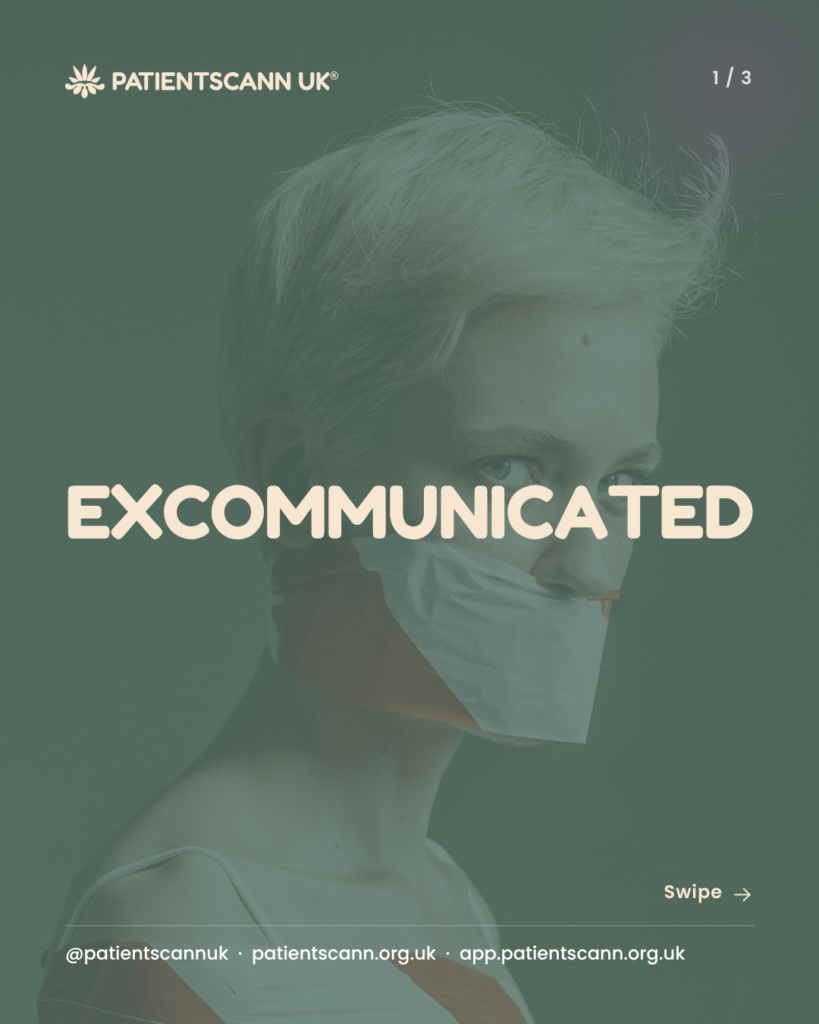
Open Letter on Patient Access, Welfare and Moderation Transparency | PatientsCann UK® Skip to content Open letter Patient welfare Public statement Open letter: why free patient help is being blocked on r/ukmedicalcannabis PatientsCann UK CIC is a non-profit. Our help is free, and it always will be. Yet for around four years we have watched our free patient resources be filtered, removed and then banned on the r/ukmedicalcannabis subreddit. This is our open letter. It sets out what happened, the reasons we were given, our honest answer to each one, and where you can always find us. PatientsCann UK CIC Open letter 30 July 2026 Read our free resources On this page The core issue Timeline Our directors Reasons and our answer Why it harms patients Our commitment Find us References About this letter This is an open statement of our own experience, shared to inform patients and to invite fair dialogue. It is not legal advice. In the screenshots below, moderator names have been removed, and the only accounts shown are our own team’s. The screenshots also show our former name and website, The Sanskara Platform; we now operate as PatientsCann UK CIC. Who we are PatientsCann UK CIC is a registered Community Interest Company. A CIC is a non-profit set up to serve the community, not to make money for owners. We exist to give UK medical cannabis patients free, honest information, legal guidance and support. We take no payment from patients for any of it. We are writing this letter because free, non-profit patient resources, ours and those we are linked to, keep being filtered, removed and banned on one of the busiest patient forums in the country: the r/ukmedicalcannabis subreddit. We have asked, appealed, and offered to follow every rule. Time and again we have been met with silence. Why this matters Free, not for profit Every guide, legal framework and toolkit we make is free. We take no money from patients, ever. Removed and banned Our links and crossposts were filtered, our posts held for approval, and then we were permanently banned. Appeals ignored Our requests, formal appeals and offers to talk have gone unanswered for years. The core issue Gatekeeping essential patient information UK medical cannabis is new, complex, and changing fast. Patients lean on each other, and on trusted independent guidance, to stay safe and to stay legal. When the first forum a worried patient finds removes free, non-commercial education, patients are the ones who lose out. Over the past few years we have found that resources produced by, or linked to, PatientsCann UK have been filtered and removed from r/ukmedicalcannabis. This has even included content where we were not the only author, but were simply named as a contributor or a source. At the time we operated under our former name, The Sanskara Platform, and links to that free resource site, along with crossposts linked to our work, were blocked. The pattern we have seen: free help is treated as advertising, links are quietly filtered, appeals are ignored, and the door is closed with no clear right to reply. What we have experienced A documented timeline Around 4 years agoOur links removed, our crossposts blocked Links to our free resource site were being automatically removed, and crossposts from our patient committee subreddit were disabled. When we asked why, the moderators told us the material was being treated as advertising, because our website “appears to be built by and partnered with companies and consultancies in the medical cannabis sector.” Our answer at the time was simple: the site exists to give patients resources and education, and it makes no money from those links. Moderation reply confirming our links and crossposts were being automatically filtered as “advertising”, and our response explaining the resources are free. Around 4 years agoA patient resource taken down A post explaining how to verify a patient was removed under the “no advertising” rule. In the same message, the moderator accepted that the post “does contain a patient resource”, but removed it anyway. A free patient resource removed under the “no advertising” rule, even though the moderator accepted it was a genuine patient resource. Around 4 years agoPosting rights limited to approval only After a month-long ban was lifted, we were told we were not banned. In practice, every post and comment we made would be held back and would only appear if a moderator approved it first. Told we were “not banned”, but that every post and comment would have to wait for a moderator to approve it. Around 3 years agoWe tried again, in good faith We reached out again, calmly, hoping to reach “a mature conclusion” about the block on our resources. We explained that patients ask the same questions every day, questions our free guides already answer, and asked to talk it through so we could move forward together. Our good-faith request to reopen the conversation and find a fair way forward for the community. Around 3 years agoA permanent ban, and a question turned back on us We were then permanently banned from taking part in r/ukmedicalcannabis. When we asked for a clear reason, and suggested an independent review of the decision, the reply did not answer the point. Instead it turned the question back on us, saying that if anything needed investigating, it was our “backing and investors.” The permanent ban notice, and the exchange that followed when we asked for reasons and an independent review. This year, MarchA fresh request for review, met with silence Most recently, in March, we sent a calm, respectful request to revisit the ban. We explained that we were never given a clear or definitive reason, and that we simply wanted the chance to put it right. As with our earlier appeals, we received no meaningful reply. Our most recent request for review, sent in good faith and, once again, left unanswered. Not one account This reached others. The messages above are from our Managing Director. But
THCA
THCA: What It Is, Effects and Safety | PatientsCann UK Skip to main content Back to Cannabinoids Guide THCA THCA THCA, THC-acid, 2-COOH-THC pronounced: tet-ruh-hy-droh-kuh-nab-ih-NOL-ik AS-id The raw, unheated form of THC. Not intoxicating until it is heated. Acidic (raw) cannabinoidFormula: C22H30O4Intoxicating: No TypeAcidic (raw) FormulaC22H30O4 IntoxicatingNo Key focusInflammation Tetrahydrocannabinolic acid · 358.5 g/mol The molecule Chemical structure This is the accurate skeletal structure of THCA, drawn from PubChem data. Each corner and line-end is a carbon atom, and the red O marks oxygen. Its formula is C22H30O4 and it weighs 358.5 g/mol. Anti-inflammatoryAnti-sicknessNeuroprotectiveRaw / unheated About What is THCA? Tetrahydrocannabinolic acid, or THCA, is the raw form of THC found in fresh, living and undried cannabis. Here is the surprising part: THCA is not intoxicating. Eating raw cannabis flower will not get you high. THCA carries an extra acid group that THC does not have. That group is the reason the two behave so differently. In the body How THCA Works The acid group on THCA stops it from fitting the CB1 receptor well, so it does not cause a high. Instead, research suggests THCA acts on other targets, including PPAR-gamma receptors, and shows anti-inflammatory activity a little like some common painkillers. Early studies, mostly in the lab and in animals, have looked at THCA for inflammation, nausea, and protecting nerve cells. Some patients use raw cannabis, for example in juices, to get THCA without the high. Receptor snapshot Where THCA Acts The endocannabinoid system has two main receptors. Here is how strongly THCA acts on each. CB1Brain & nervous systemNone Its bulky acid group stops it fitting CB1 well. This is why raw, unheated cannabis does not make you high. CB2Immune system & bodyWeak / indirect Weak action at CB2. Beyond CB1 and CB2: Acts on PPAR-gamma and has COX / anti-inflammatory activity. In the plant How THCA is Made THCA is made from the mother acid CBGA by an enzyme called THCA synthase. It is the main cannabinoid in most dried high-THC flower, before it is heated. When you vape, smoke or cook the flower, heat removes a carbon dioxide group and turns THCA into THC. This is the single most important step in making cannabis intoxicating. PathwayTHCAadd heat →Delta-9-THC Good to know Safety and Side Effects THCA in its raw form is not intoxicating and appears well tolerated. The main practical point is that heat, even gentle warmth over time, converts it into intoxicating THC, so a “raw” product can change if it is warmed or stored badly. Human safety data is limited. Speak to your prescriber before using raw or high-THCA products. Questions THCA: Common Questions Why does raw cannabis not get you high? Because fresh cannabis contains THCA, not THC. THCA carries an extra acid group that stops it fitting the CB1 receptor. Only when you heat it (smoking, vaping or cooking) does it lose that group and become intoxicating THC. Is THCA the same as THC? No, but they are closely related. THCA is the raw, acidic form. Heat removes a carbon dioxide molecule and turns THCA into THC – a process called decarboxylation. PreviousCBDV NextCBDA Back to full Cannabinoids Guide Important: This page is for education only. It is not medical advice. Cannabinoid research is still developing, and many studies have been done in cells or animals rather than people. Always speak to your prescriber before changing your treatment. PatientsCann UK does not recommend any specific cannabis product. References Nadal, X. et al. (2017) ‘Tetrahydrocannabinolic acid is a potent PPAR-gamma agonist with neuroprotective activity’, British Journal of Pharmacology, 174(23), pp. 4263-4276. doi: 10.1111/bph.14019. Moreno-Sanz, G. (2016) ‘Can you pass the acid test? Critical review and novel therapeutic perspectives of delta-9-tetrahydrocannabinolic acid A’, Cannabis and Cannabinoid Research, 1(1), pp. 124-130. doi: 10.1089/can.2016.0008. Izzo, A.A., Borrelli, F., Capasso, R., Di Marzo, V. and Mechoulam, R. (2009) ‘Non-psychotropic plant cannabinoids: new therapeutic opportunities from an ancient herb’, Trends in Pharmacological Sciences, 30(10), pp. 515-527. doi: 10.1016/j.tips.2009.07.006. National Center for Biotechnology Information (2025) PubChem Compound Database. Bethesda: U.S. National Library of Medicine. Available at: https://pubchem.ncbi.nlm.nih.gov (Accessed: 29 July 2026).
THCV
THCV: What It Is, Effects and Safety | PatientsCann UK Skip to main content Back to Cannabinoids Guide THCV THCV THCV, tetrahydrocannabivarin pronounced: tet-ruh-hy-droh-kuh-NAB-ih-vair-in THC’s slimmer cousin – it can dial the CB1 receptor down or up depending on the dose. Neutral cannabinoidFormula: C19H26O2Intoxicating: Dose-based TypeNeutral FormulaC19H26O2 IntoxicatingDose-based Key focusAppetite Tetrahydrocannabivarin · 286.4 g/mol The molecule Chemical structure This is the accurate skeletal structure of THCV, drawn from PubChem data. Each corner and line-end is a carbon atom, and the red O marks oxygen. Its formula is C19H26O2 and it weighs 286.4 g/mol. Appetite controlFocusBlood-sugarEnergy About What is THCV? Tetrahydrocannabivarin, or THCV, is a slimmer cousin of THC. It has a shorter carbon “tail”, three carbons instead of five, and that small change gives it some surprising behaviour. THCV is found in higher amounts in certain plants, particularly some varieties from Africa and Asia. At the low doses usually found in products, it is not intoxicating. In the body How THCV Works THCV is unusual because its effect flips with dose. At low doses it blocks the CB1 receptor, the opposite of what THC does, which is why it is being studied to curb appetite. At high doses it can switch CB1 on instead, more like THC. It also acts as a partial activator of CB2. This double action has made THCV interesting for weight management, and for blood-sugar control in type 2 diabetes, where early trials look promising but are still small. Receptor snapshot Where THCV Acts The endocannabinoid system has two main receptors. Here is how strongly THCV acts on each. CB1Brain & nervous systemDampens / blocks At low doses it BLOCKS CB1 – the opposite of THC – which may curb appetite. At high doses it can switch CB1 on instead. CB2Immune system & bodyPartial Acts as a partial activator of CB2. In the plant How THCV is Made THCV comes from its acid, THCVA, which sits on a separate “propyl” branch of the family tree. This branch starts from CBGVA, the shorter-tailed version of the mother acid CBGA. As with the others, heat turns THCVA into THCV. Comes fromTHCVA→ add heat →THCV Good to know Safety and Side Effects THCV appears well tolerated in early studies, with few side effects at the doses tested. Because it can behave like THC at high doses, very strong products could in theory be intoxicating. Research in people is still limited, so speak to your prescriber before using THCV, especially if you manage diabetes or take medicines that affect appetite or blood sugar. Questions THCV: Common Questions Is THCV an appetite suppressant? At low doses THCV blocks the CB1 receptor, the opposite of THC, which is why it is being studied for appetite control and weight management. At high doses this can flip and it may activate CB1 instead. What makes THCV different from THC? THCV has a shorter carbon “tail” (three carbons instead of five). This small change flips how it behaves at the CB1 receptor at low doses. PreviousCBC NextCBDV Back to full Cannabinoids Guide Important: This page is for education only. It is not medical advice. Cannabinoid research is still developing, and many studies have been done in cells or animals rather than people. Always speak to your prescriber before changing your treatment. PatientsCann UK does not recommend any specific cannabis product. References Pertwee, R.G. (2008) ‘The diverse CB1 and CB2 receptor pharmacology of three plant cannabinoids: delta-9-tetrahydrocannabinol, cannabidiol and delta-9-tetrahydrocannabivarin’, British Journal of Pharmacology, 153(2), pp. 199-215. doi: 10.1038/sj.bjp.0707442. Izzo, A.A., Borrelli, F., Capasso, R., Di Marzo, V. and Mechoulam, R. (2009) ‘Non-psychotropic plant cannabinoids: new therapeutic opportunities from an ancient herb’, Trends in Pharmacological Sciences, 30(10), pp. 515-527. doi: 10.1016/j.tips.2009.07.006. Morales, P., Hurst, D.P. and Reggio, P.H. (2017) ‘Molecular targets of the phytocannabinoids: a complex picture’, Progress in the Chemistry of Organic Natural Products, 103, pp. 103-131. doi: 10.1007/978-3-319-45541-9_4. National Center for Biotechnology Information (2025) PubChem Compound Database. Bethesda: U.S. National Library of Medicine. Available at: https://pubchem.ncbi.nlm.nih.gov (Accessed: 29 July 2026).
Delta-8-THC
Delta-8-THC: What It Is, Effects and Safety | PatientsCann UK Skip to main content Back to Cannabinoids Guide 8-THC Delta-8-THC delta-8-THC, delta eight pronounced: DEL-tuh ate tet-ruh-hy-droh-kuh-NAB-ih-nol A close cousin of THC with the double bond in a different place – usually milder. Neutral cannabinoidFormula: C21H30O2Intoxicating: Yes TypeNeutral FormulaC21H30O2 IntoxicatingYes Key focusMilder high Delta-8-tetrahydrocannabinol · 314.5 g/mol The molecule Chemical structure This is the accurate skeletal structure of Delta-8-THC, drawn from PubChem data. Each corner and line-end is a carbon atom, and the red O marks oxygen. Its formula is C21H30O2 and it weighs 314.5 g/mol. Milder highAnti-sicknessPain reliefAppetite About What is Delta-8-THC? Delta-8-THC is a close relative of ordinary delta-9-THC. The two molecules are almost identical; the only difference is where one double bond sits in the ring. That tiny change is enough to make delta-8 behave a little differently. It occurs naturally in cannabis only in very small amounts. Most delta-8 sold abroad is made in a lab from CBD, which is a very different thing from a plant extract. In the body How 8-THC Works Delta-8 switches on the same CB1 receptor as delta-9-THC, so it is intoxicating, but it holds on a little less tightly. Many people describe its effects as milder and clearer-headed, with less anxiety, though this varies from person to person. It is also more chemically stable than delta-9-THC, meaning it breaks down more slowly. Research on delta-8 in people is limited compared with delta-9-THC. Receptor snapshot Where 8-THC Acts The endocannabinoid system has two main receptors. Here is how strongly Delta-8-THC acts on each. CB1Brain & nervous systemPartial Switches on CB1 like Delta-9-THC, but holds on a little less tightly, so the effects are usually milder. CB2Immune system & bodyPartial Also binds CB2. In the plant How 8-THC is Made In the plant, only a trace of delta-8 forms, partly as delta-9-THC slowly degrades. Because there is so little of it naturally, commercial delta-8 is usually made in a lab by converting CBD. This is why product quality and purity matter so much. Comes fromDelta-9-THC→ add heat →Delta-8-THC Good to know Safety and Side Effects Delta-8 can cause the same kinds of effects as THC, including a fast heartbeat, dry mouth and drowsiness, and it affects driving. A bigger concern is quality: lab-made delta-8 products, especially unregulated ones, can contain leftover chemicals and unknown by-products. In the UK, delta-8-THC is a controlled substance, the same as delta-9-THC. Only use cannabinoids from a regulated, prescribed source. Questions Delta-8-THC: Common Questions Is delta-8-THC the same as normal THC? Almost. Delta-8 and delta-9-THC differ only by where one double bond sits in the ring. That small change makes delta-8 bind the CB1 receptor a little less tightly, so its effects are usually milder. Is delta-8-THC legal in the UK? Delta-8-THC is a controlled substance in the UK, the same as delta-9-THC. Much of what is sold abroad as “delta-8” is made in a lab, not from the plant. PreviousCBN NextCBC Back to full Cannabinoids Guide Important: This page is for education only. It is not medical advice. Cannabinoid research is still developing, and many studies have been done in cells or animals rather than people. Always speak to your prescriber before changing your treatment. PatientsCann UK does not recommend any specific cannabis product. References Kruger, D.J. and Kruger, J.S. (2022) ‘Consumer experiences with delta-8-THC: medical use, pharmaceutical substitution, and comparisons with delta-9-THC’, Cannabis and Cannabinoid Research, 7(6), pp. 866-876. doi: 10.1089/can.2021.0124. ElSohly, M.A. and Gul, W. (2014) ‘Constituents of Cannabis sativa’, in Pertwee, R. (ed.) Handbook of Cannabis. Oxford: Oxford University Press, pp. 3-22. Pertwee, R.G. (2008) ‘The diverse CB1 and CB2 receptor pharmacology of three plant cannabinoids: delta-9-tetrahydrocannabinol, cannabidiol and delta-9-tetrahydrocannabivarin’, British Journal of Pharmacology, 153(2), pp. 199-215. doi: 10.1038/sj.bjp.0707442. National Center for Biotechnology Information (2025) PubChem Compound Database. Bethesda: U.S. National Library of Medicine. Available at: https://pubchem.ncbi.nlm.nih.gov (Accessed: 29 July 2026).
CBGA
CBGA: What It Is, Effects and Safety | PatientsCann UK Skip to main content Back to Cannabinoids Guide CBGA CBGA CBGA, “the mother acid” pronounced: kan-uh-bih-jer-OL-ik AS-id The true “mother” – the acid the plant turns into every other cannabinoid. Acidic (raw) cannabinoidFormula: C22H32O4Intoxicating: No TypeAcidic (raw) FormulaC22H32O4 IntoxicatingNo Key focusPrecursor Cannabigerolic acid · 360.5 g/mol The molecule Chemical structure This is the accurate skeletal structure of CBGA, drawn from PubChem data. Each corner and line-end is a carbon atom, and the red O marks oxygen. Its formula is C22H32O4 and it weighs 360.5 g/mol. PrecursorMetabolicAnti-inflammatoryRaw / unheated About What is CBGA? Cannabigerolic acid, or CBGA, is where the whole cannabinoid story begins. It is the very first cannabinoid the cannabis plant makes, and it is often called the “mother cannabinoid” because everything else is built from it. On its own, CBGA is not intoxicating. It is a raw acid, and most of it is quickly turned into other cannabinoid acids as the plant grows. In the body How CBGA Works CBGA does not act strongly on the CB1 or CB2 receptors directly. Its main role is as a building block. Inside the plant, three different enzymes take CBGA and turn it into THCA, CBDA or CBCA, which then become THC, CBD and CBC when heated. Because it is a starting material rather than a finished product, CBGA has been studied less as a medicine, though early research is beginning to look at it for metabolism and inflammation. Receptor snapshot Where CBGA Acts The endocannabinoid system has two main receptors. Here is how strongly CBGA acts on each. CB1Brain & nervous systemNone Does not act on CB1 directly. CB2Immune system & bodyNone Does not act on CB2 directly. Beyond CB1 and CB2: The starting molecule. The plant’s enzymes turn CBGA into THCA, CBDA and CBCA. Early research looks at PPAR receptors and metabolism. In the plant How CBGA is Made CBGA is built when the plant joins a molecule called olivetolic acid with a terpene building block, geranyl pyrophosphate, using an enzyme called CBGA synthase. From there, CBGA is the crossroads of the whole family. If it is simply heated, it becomes CBG. If the plant’s enzymes act on it first, it becomes the acids that lead to THC, CBD and CBC. PathwayCBGAadd heat →CBG Good to know Safety and Side Effects There is very little human safety data on CBGA, because it is usually converted into other cannabinoids rather than used on its own. It is not intoxicating. Treat any CBGA product as experimental and speak to your prescriber before trying it. Questions CBGA: Common Questions What is CBGA? CBGA (cannabigerolic acid) is the first cannabinoid the cannabis plant makes. It is often called the “mother cannabinoid” because the plant’s enzymes turn it into the acids that become THC, CBD and CBC. Does CBGA turn into CBG? Yes. When CBGA is heated it loses its acid group (a process called decarboxylation) and becomes CBG. PreviousCBDA Next11-Hydroxy-THC Back to full Cannabinoids Guide Important: This page is for education only. It is not medical advice. Cannabinoid research is still developing, and many studies have been done in cells or animals rather than people. Always speak to your prescriber before changing your treatment. PatientsCann UK does not recommend any specific cannabis product. References Nachnani, R., Raup-Konsavage, W.M. and Vrana, K.E. (2021) ‘The pharmacological case for cannabigerol’, Journal of Pharmacology and Experimental Therapeutics, 376(2), pp. 204-212. doi: 10.1124/jpet.120.000340. Morales, P., Hurst, D.P. and Reggio, P.H. (2017) ‘Molecular targets of the phytocannabinoids: a complex picture’, Progress in the Chemistry of Organic Natural Products, 103, pp. 103-131. doi: 10.1007/978-3-319-45541-9_4. National Center for Biotechnology Information (2025) PubChem Compound Database. Bethesda: U.S. National Library of Medicine. Available at: https://pubchem.ncbi.nlm.nih.gov (Accessed: 29 July 2026). Izzo, A.A., Borrelli, F., Capasso, R., Di Marzo, V. and Mechoulam, R. (2009) ‘Non-psychotropic plant cannabinoids: new therapeutic opportunities from an ancient herb’, Trends in Pharmacological Sciences, 30(10), pp. 515-527. doi: 10.1016/j.tips.2009.07.006.
CBDV
CBDV: What It Is, Effects and Safety | PatientsCann UK Skip to main content Back to Cannabinoids Guide CBDV CBDV CBDV, cannabidivarin pronounced: kan-uh-bih-dih-VAIR-in CBD’s slimmer cousin – non-intoxicating and studied for seizures. Neutral cannabinoidFormula: C19H26O2Intoxicating: No TypeNeutral FormulaC19H26O2 IntoxicatingNo Key focusSeizures Cannabidivarin · 286.4 g/mol The molecule Chemical structure This is the accurate skeletal structure of CBDV, drawn from PubChem data. Each corner and line-end is a carbon atom, and the red O marks oxygen. Its formula is C19H26O2 and it weighs 286.4 g/mol. Anti-seizureCalmingAnti-sicknessAnti-inflammatory About What is CBDV? Cannabidivarin, or CBDV, is the slimmer cousin of CBD, with a shorter carbon tail. Like CBD, it does not make you high. It is usually a minor part of the plant, though some varieties, especially certain landrace plants from Asia, contain more of it. In the body How CBDV Works CBDV has very little direct action at the CB1 and CB2 receptors. Instead it works mainly through the body’s TRP channels, which are involved in pain, inflammation and the control of nerve excitability. Its most studied use is as an anticonvulsant. Animal research has shown it can reduce seizures, and it has also been explored for behaviours linked with autism. Human research is still at an early stage. Receptor snapshot Where CBDV Acts The endocannabinoid system has two main receptors. Here is how strongly CBDV acts on each. CB1Brain & nervous systemNone Very little direct action at CB1, so no high. CB2Immune system & bodyWeak / indirect Weak action at CB2. Beyond CB1 and CB2: Acts on TRP channels. Being studied for epilepsy and for behaviours linked with autism. In the plant How CBDV is Made CBDV is made from its acid, CBDVA, on the same “propyl” branch of the family tree as THCV, starting from the shorter-tailed mother acid CBGVA. Heat turns CBDVA into CBDV. Comes fromCBDVA→ add heat →CBDV Good to know Safety and Side Effects CBDV has been well tolerated in the clinical trials done so far, with mild side effects such as stomach upset. As an experimental compound, its long-term safety is still being studied. It is not a licensed medicine on its own, so only use it under the guidance of a prescriber. Questions CBDV: Common Questions What is CBDV used for? CBDV is being researched mainly as an anticonvulsant, for epilepsy, and for behaviours associated with autism. It is still experimental and not a licensed medicine on its own. Does CBDV get you high? No. Like CBD, CBDV is non-intoxicating and does not activate the CB1 receptor. PreviousTHCV NextTHCA Back to full Cannabinoids Guide Important: This page is for education only. It is not medical advice. Cannabinoid research is still developing, and many studies have been done in cells or animals rather than people. Always speak to your prescriber before changing your treatment. PatientsCann UK does not recommend any specific cannabis product. References Hill, A.J. et al. (2012) ‘Cannabidivarin is anticonvulsant in mouse and rat’, British Journal of Pharmacology, 167(8), pp. 1629-1642. doi: 10.1111/j.1476-5381.2012.02207.x. Izzo, A.A., Borrelli, F., Capasso, R., Di Marzo, V. and Mechoulam, R. (2009) ‘Non-psychotropic plant cannabinoids: new therapeutic opportunities from an ancient herb’, Trends in Pharmacological Sciences, 30(10), pp. 515-527. doi: 10.1016/j.tips.2009.07.006. National Center for Biotechnology Information (2025) PubChem Compound Database. Bethesda: U.S. National Library of Medicine. Available at: https://pubchem.ncbi.nlm.nih.gov (Accessed: 29 July 2026). Morales, P., Hurst, D.P. and Reggio, P.H. (2017) ‘Molecular targets of the phytocannabinoids: a complex picture’, Progress in the Chemistry of Organic Natural Products, 103, pp. 103-131. doi: 10.1007/978-3-319-45541-9_4.
CBDA
CBDA: What It Is, Effects and Safety | PatientsCann UK Skip to main content Back to Cannabinoids Guide CBDA CBDA CBDA, CBD-acid pronounced: kan-uh-bih-dy-OL-ik AS-id The raw, unheated form of CBD. Studied for nausea and inflammation. Acidic (raw) cannabinoidFormula: C22H30O4Intoxicating: No TypeAcidic (raw) FormulaC22H30O4 IntoxicatingNo Key focusNausea Cannabidiolic acid · 358.5 g/mol The molecule Chemical structure This is the accurate skeletal structure of CBDA, drawn from PubChem data. Each corner and line-end is a carbon atom, and the red O marks oxygen. Its formula is C22H30O4 and it weighs 358.5 g/mol. Anti-sicknessAnti-inflammatoryCalmingRaw / unheated About What is CBDA? Cannabidiolic acid, or CBDA, is the raw form of CBD found in the fresh plant. Like CBD, it does not make you high. It was one of the first cannabinoids ever isolated, back in the 1950s. CBDA carries an extra acid group compared with CBD, which changes how it behaves in the body. In the body How CBDA Works CBDA has a couple of interesting actions. It blocks an enzyme called COX-2, which is the same target as some anti-inflammatory painkillers, and it strongly activates the serotonin 5-HT1A receptor, which is closely involved in feeling sick. Because of this, the strongest early research on CBDA is for nausea and vomiting, where animal studies suggest it may be even more powerful than CBD itself. It is also being explored for inflammation and anxiety. Receptor snapshot Where CBDA Acts The endocannabinoid system has two main receptors. Here is how strongly CBDA acts on each. CB1Brain & nervous systemNone Does not fit CB1, so no high. CB2Immune system & bodyNone Little action at CB2. Beyond CB1 and CB2: Blocks COX-2 (like some anti-inflammatory medicines) and acts strongly on 5-HT1A serotonin receptors, which are linked to nausea. In the plant How CBDA is Made CBDA is made from the mother acid CBGA by an enzyme called CBDA synthase. It is the main cannabinoid in fresh CBD-rich plants before heating. Heat removes a carbon dioxide group and turns CBDA into CBD. This happens slowly even at room temperature, which is why fresh plants are richer in the acid. PathwayCBDAadd heat →CBD Good to know Safety and Side Effects CBDA appears well tolerated in the limited research available. As it is not intoxicating, it does not carry the “high”-related risks of THC. Its long-term safety in people is not yet well established. CBDA is less stable than CBD and slowly turns into it with heat and time. Tell your prescriber before using a raw or high-CBDA product. Questions CBDA: Common Questions What is CBDA good for? Early research suggests CBDA may help with nausea and inflammation, partly by acting on serotonin (5-HT1A) receptors. It is still experimental and not a licensed medicine. How is CBDA different from CBD? CBDA is the raw, acidic form found in the living plant. Heat removes its acid group and turns it into CBD, the form most people are familiar with. PreviousTHCA NextCBGA Back to full Cannabinoids Guide Important: This page is for education only. It is not medical advice. Cannabinoid research is still developing, and many studies have been done in cells or animals rather than people. Always speak to your prescriber before changing your treatment. PatientsCann UK does not recommend any specific cannabis product. References Bolognini, D. et al. (2013) ‘Cannabidiolic acid prevents vomiting in Suncus murinus and nausea-induced behaviour in rats by enhancing 5-HT1A receptor activation’, British Journal of Pharmacology, 168(6), pp. 1456-1470. doi: 10.1111/bph.12043. Izzo, A.A., Borrelli, F., Capasso, R., Di Marzo, V. and Mechoulam, R. (2009) ‘Non-psychotropic plant cannabinoids: new therapeutic opportunities from an ancient herb’, Trends in Pharmacological Sciences, 30(10), pp. 515-527. doi: 10.1016/j.tips.2009.07.006. National Center for Biotechnology Information (2025) PubChem Compound Database. Bethesda: U.S. National Library of Medicine. Available at: https://pubchem.ncbi.nlm.nih.gov (Accessed: 29 July 2026). Morales, P., Hurst, D.P. and Reggio, P.H. (2017) ‘Molecular targets of the phytocannabinoids: a complex picture’, Progress in the Chemistry of Organic Natural Products, 103, pp. 103-131. doi: 10.1007/978-3-319-45541-9_4.
CBC
CBC: What It Is, Effects and Safety | PatientsCann UK Skip to main content Back to Cannabinoids Guide CBC CBC cannabichromene pronounced: kan-uh-bih-KROH-meen A quiet, non-intoxicating cannabinoid studied for pain and mood. Neutral cannabinoidFormula: C21H30O2Intoxicating: No TypeNeutral FormulaC21H30O2 IntoxicatingNo Key focusPain & mood Cannabichromene · 314.5 g/mol The molecule Chemical structure This is the accurate skeletal structure of CBC, drawn from PubChem data. Each corner and line-end is a carbon atom, and the red O marks oxygen. Its formula is C21H30O2 and it weighs 314.5 g/mol. Pain reliefMoodAnti-inflammatoryAnti-bacterial About What is CBC? Cannabichromene, or CBC, is one of the four most common cannabinoids in cannabis, alongside THC, CBD and CBG, yet most people have never heard of it. It does not make you high. Like the others, CBC starts as an acid, CBCA, made from the mother cannabinoid CBGA, and it appears once the plant is heated. In the body How CBC Works CBC barely touches the CB1 receptor, which is why it is not intoxicating. It does switch on the CB2 receptor, and it strongly activates the body’s TRP channels, which sense pain and heat. This may be how it helps with discomfort. Laboratory research has looked at CBC for pain, mood and inflammation, and even at how it might support brain cells. Like many minor cannabinoids, it is thought to work best as part of a team, the “entourage effect”, rather than alone. Receptor snapshot Where CBC Acts The endocannabinoid system has two main receptors. Here is how strongly CBC acts on each. CB1Brain & nervous systemNone Barely touches CB1, so it is not intoxicating. CB2Immune system & bodyPartial Does activate CB2, which is linked to inflammation. Beyond CB1 and CB2: Strongly activates TRPA1 and TRPV pain and heat-sensing channels, which may be how it helps with pain. In the plant How CBC is Made CBC is made from CBCA, which the plant produces from CBGA using an enzyme called CBCA synthase. Heating turns CBCA into CBC. Over time, and with strong light, CBC can slowly change again into another cannabinoid called CBL. Comes fromCBCA→ add heat →CBC Good to know Safety and Side Effects CBC appears to be well tolerated, with little sign of serious side effects in the limited research so far. Because human studies are scarce, its long-term safety is not fully known. As always, tell your prescriber before adding a new cannabinoid to your routine. Questions CBC: Common Questions Is CBC intoxicating? No. CBC hardly binds the CB1 receptor, so it will not make you high. It is being studied for pain, mood and inflammation. What does CBC do? CBC seems to work mainly through the body’s TRP pain and heat channels, and by activating CB2 receptors. Researchers think it works best together with THC and CBD, as part of the “entourage effect”. PreviousDelta-8-THC NextTHCV Back to full Cannabinoids Guide Important: This page is for education only. It is not medical advice. Cannabinoid research is still developing, and many studies have been done in cells or animals rather than people. Always speak to your prescriber before changing your treatment. PatientsCann UK does not recommend any specific cannabis product. References DeLong, G.T., Wolf, C.E., Poklis, A. and Lichtman, A.H. (2010) ‘Pharmacological evaluation of the natural constituent of Cannabis sativa, cannabichromene and its modulation by delta-9-tetrahydrocannabinol’, Drug and Alcohol Dependence, 112(1-2), pp. 126-133. doi: 10.1016/j.drugalcdep.2010.05.019. Izzo, A.A., Borrelli, F., Capasso, R., Di Marzo, V. and Mechoulam, R. (2009) ‘Non-psychotropic plant cannabinoids: new therapeutic opportunities from an ancient herb’, Trends in Pharmacological Sciences, 30(10), pp. 515-527. doi: 10.1016/j.tips.2009.07.006. Morales, P., Hurst, D.P. and Reggio, P.H. (2017) ‘Molecular targets of the phytocannabinoids: a complex picture’, Progress in the Chemistry of Organic Natural Products, 103, pp. 103-131. doi: 10.1007/978-3-319-45541-9_4. National Center for Biotechnology Information (2025) PubChem Compound Database. Bethesda: U.S. National Library of Medicine. Available at: https://pubchem.ncbi.nlm.nih.gov (Accessed: 29 July 2026).
CBG
CBG: What It Is, Effects and Safety | PatientsCann UK Skip to main content Back to Cannabinoids Guide CBG CBG cannabigerol, “the mother cannabinoid” pronounced: kan-uh-bih-JER-ol The “mother cannabinoid” – the plant makes everything else from its acid form. Neutral cannabinoidFormula: C21H32O2Intoxicating: No TypeNeutral FormulaC21H32O2 IntoxicatingNo Key focusFocus & gut Cannabigerol · 316.5 g/mol The molecule Chemical structure This is the accurate skeletal structure of CBG, drawn from PubChem data. Each corner and line-end is a carbon atom, and the red O marks oxygen. Its formula is C21H32O2 and it weighs 316.5 g/mol. FocusAnti-bacterialGut supportAnti-inflammatory About What is CBG? Cannabigerol, or CBG, is often called the “mother cannabinoid”. That is because its acid form, CBGA, is the raw material the plant uses to build almost every other cannabinoid. Most plants turn nearly all of their CBGA into other things, so mature flower usually contains only a little CBG. To get more CBG, growers harvest some plants early, or breed special CBG-rich varieties. Like CBD, CBG does not make you high. In the body How CBG Works CBG binds both the CB1 and CB2 receptors, but only weakly, which is why it is not intoxicating. It also acts on other targets, including alpha-2 adrenoceptors, which are involved in alertness, and serotonin receptors. Early research, still mostly in the lab and in animals, is looking at CBG for inflammatory bowel disease, for protecting nerve cells, for mood, and as an antibacterial. Human studies are still limited, so its benefits are not yet proven. Receptor snapshot Where CBG Acts The endocannabinoid system has two main receptors. Here is how strongly CBG acts on each. CB1Brain & nervous systemPartial Binds CB1 weakly, so it is not intoxicating. CB2Immune system & bodyPartial Binds CB2 weakly too. Beyond CB1 and CB2: Also acts on alpha-2 adrenoceptors and blocks 5-HT1A serotonin receptors. In the plant How CBG is Made CBG comes from CBGA, the first cannabinoid acid the plant makes, by joining a molecule called olivetolic acid with a terpene building block. Any CBGA the plant does not turn into THCA, CBDA or CBCA can be heated to become CBG. This is why CBG sits at the very start of the cannabinoid family tree. Comes fromCBGA→ add heat →CBG Good to know Safety and Side Effects CBG appears to be well tolerated in the small amount of research done so far, with few reported side effects. Because studies in people are limited, its long-term safety is not fully known. As with any cannabinoid, tell your prescriber before adding CBG, especially if you take other medicines. Questions CBG: Common Questions Why is CBG called the mother cannabinoid? Because its acid form, CBGA, is the raw material the cannabis plant uses to build the other cannabinoids. Enzymes turn CBGA into THCA, CBDA and CBCA, which then become THC, CBD and CBC. Is CBG intoxicating? No. CBG binds the CB1 receptor only weakly, so it does not cause a high. PreviousCBD NextCBN Back to full Cannabinoids Guide Important: This page is for education only. It is not medical advice. Cannabinoid research is still developing, and many studies have been done in cells or animals rather than people. Always speak to your prescriber before changing your treatment. PatientsCann UK does not recommend any specific cannabis product. References Nachnani, R., Raup-Konsavage, W.M. and Vrana, K.E. (2021) ‘The pharmacological case for cannabigerol’, Journal of Pharmacology and Experimental Therapeutics, 376(2), pp. 204-212. doi: 10.1124/jpet.120.000340. Izzo, A.A., Borrelli, F., Capasso, R., Di Marzo, V. and Mechoulam, R. (2009) ‘Non-psychotropic plant cannabinoids: new therapeutic opportunities from an ancient herb’, Trends in Pharmacological Sciences, 30(10), pp. 515-527. doi: 10.1016/j.tips.2009.07.006. Morales, P., Hurst, D.P. and Reggio, P.H. (2017) ‘Molecular targets of the phytocannabinoids: a complex picture’, Progress in the Chemistry of Organic Natural Products, 103, pp. 103-131. doi: 10.1007/978-3-319-45541-9_4. National Center for Biotechnology Information (2025) PubChem Compound Database. Bethesda: U.S. National Library of Medicine. Available at: https://pubchem.ncbi.nlm.nih.gov (Accessed: 29 July 2026).
