Myrcene

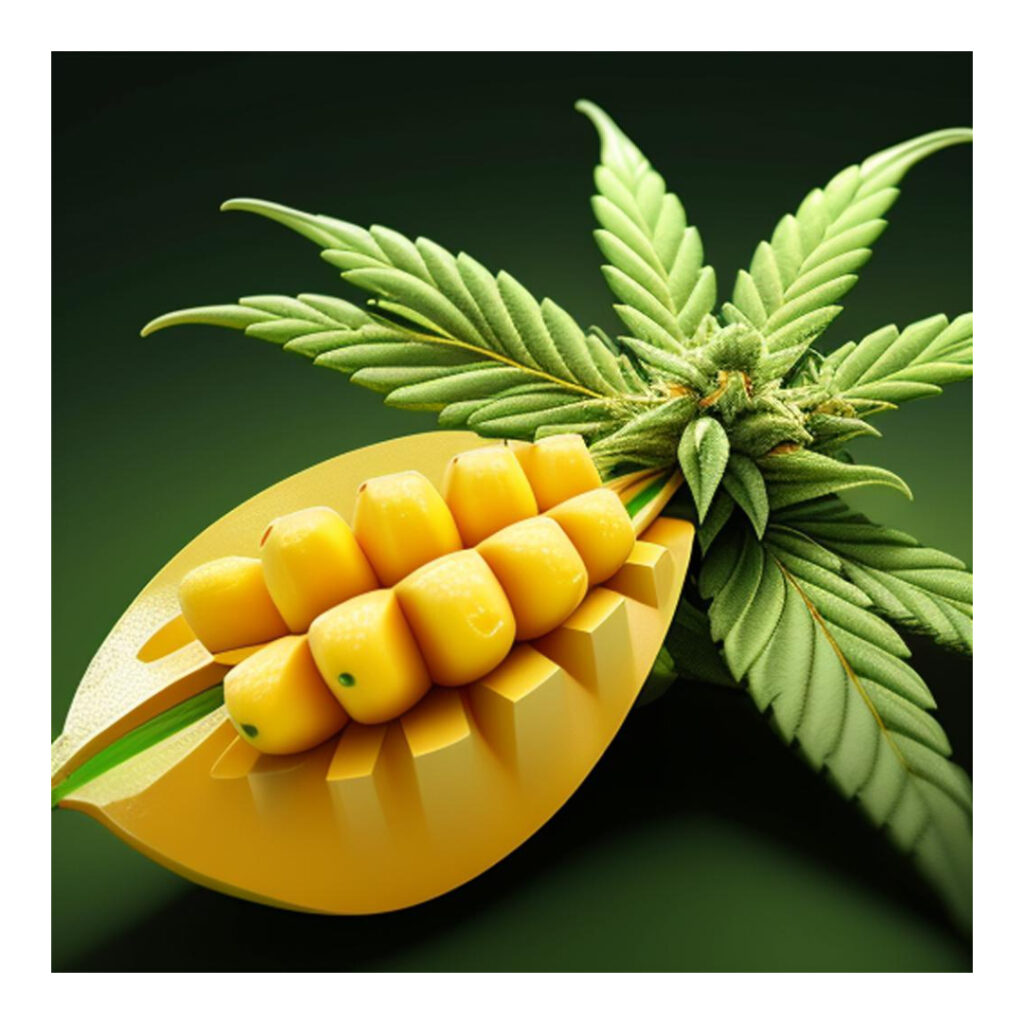
Myrcene – PatientsCann UK Skip to main content Back to Terpenes Guide Myrcene Beta-Myrcene pronounced: MUR-seen The most common terpene in cannabis. Found in mangoes and hops. Monoterpene Boiling point: 167°C Terpene type Monoterpene Boiling point 167°C Primary aroma Earthy Key effect Relaxing Aroma profile How it Smells The aroma of myrcene is described as: EarthyMuskyClovesCardamomSweet Found naturally in: Mangoes, hops, lemongrass, thyme, bay leaves Effects Linked Effects RelaxingSleep supportPain reliefAnti-inflammatory These effects are based on early-stage research in animals and cells. They are not proven in humans. Do not change your treatment based on this information. About What is Myrcene? Myrcene is the terpene found in the highest amounts in most cannabis strains. It is why so many varieties have that earthy, slightly musky smell with a hint of ripe fruit. You are already familiar with it even if you did not know the name: that rich smell when you bite into a ripe mango, or the hoppy scent of beer, both come from myrcene. Chemically, myrcene is a small monoterpene molecule (Booth and Bohlmann, 2019). It evaporates quickly at room temperature, which is why the smell hits you straight away when you open a sealed container. Effects in detail What the Research Says Early research suggests myrcene may have sedative and muscle-relaxant properties (Nuutinen, 2018). Studies in animals have found it can reduce pain signals and lower inflammation (Baram et al., 2022). People who use cannabis strains high in myrcene often describe feeling deeply relaxed and sleepy. Myrcene is also thought to play a role in the entourage effect. Some researchers believe it may help other compounds, including THC and CBD, cross into the brain more easily, which could make effects feel stronger or come on faster (Russo, 2011). Everyday sources Where You Find it in Daily Life You can find myrcene in many everyday foods. Mangoes are the richest natural source. Hops (used to brew beer) are packed with it, and it is what gives India Pale Ale its distinctive earthy and slightly sweet bitterness. Bay leaves, lemongrass, and thyme also contain myrcene in smaller amounts. Some people eat a ripe mango about 45 minutes before using medical cannabis. The idea is that the myrcene in the mango might add to the overall effect. There is no strong clinical evidence for this yet, but it is a harmless experiment if your doctor approves. Research Key Studies A 2022 study by Baram et al. found that myrcene activates both CB1 and CB2 receptors in the body. These are the same receptors that THC and CBD work on. This supports the idea that terpenes are more than just smell molecules. Russo (2011) reviewed the science behind the entourage effect and identified myrcene as one of the most important terpenes for cannabis pharmacology. A later study by LaVigne et al. (2021) confirmed that cannabis terpenes, including myrcene, can enhance the activity of cannabinoids at low concentrations. Previous Camphene Next Limonene Back to full Terpenes Guide Important: The information on this page is for education only. It is not medical advice. Terpene research is still in its early stages. Many studies have been done in animals, not yet in people. Always speak to your doctor before changing your treatment. PatientsCann UK does not recommend any specific cannabis product. References Baram, L. et al. (2022) ‘Major cannabis terpenes, applied individually and in combination, activate endogenous cannabinoid CB1 and CB2 receptors’, Frontiers in Pharmacology, 13, 1040962. doi: 10.3389/fphar.2022.1040962. Booth, J.K. and Bohlmann, J. (2019) ‘Terpenes in Cannabis sativa: from plant genome to humans’, Plant Science, 284, pp. 67-72. doi: 10.1016/j.plantsci.2019.03.022. LaVigne, J.E. et al. (2021) ‘Cannabis sativa terpenes are cannabimimetic and selectively enhance cannabinoid activity’, Scientific Reports, 11(1), 8232. doi: 10.1038/s41598-021-87740-8. Nuutinen, T. (2018) ‘Medicinal properties of terpenes found in Cannabis sativa and Humulus lupulus’, European Journal of Medicinal Chemistry, 157, pp. 198-228. doi: 10.1016/j.ejmech.2018.07.076. Russo, E.B. (2011) ‘Taming THC: potential cannabis synergy and phytocannabinoid-terpenoid entourage effects’, British Journal of Pharmacology, 163(7), pp. 1344-1364. doi: 10.1111/j.1476-5381.2011.01238.x.
