Camphene
Camphene – PatientsCann UK Skip to main content Back to Terpenes Guide Camphene 2,2-Dimethyl-3-methylenebicyclo[2.2.1]heptane pronounced: KAM-feen Smells like a damp fir forest. May support healthy cholesterol levels. Monoterpene Boiling point: 159°C Terpene type Monoterpene Boiling point 159°C Primary aroma Damp Earth Key effect Anti-inflammatory Aroma profile How it Smells The aroma of camphene is described as: Damp EarthFir NeedlesCamphorForest Floor Found naturally in: Cypress, rosemary, ginger, nutmeg, valerian, sage Effects Linked Effects Anti-inflammatoryPain reliefAntioxidantCardiovascular These effects are based on early-stage research in animals and cells. They are not proven in humans. Do not change your treatment based on this information. About What is Camphene? Camphene has a distinctive, damp, earthy aroma with strong fir tree and camphor notes. If you have ever walked through a coniferous forest after rain and noticed that sharp, resinous, almost medicinal smell, camphene is a significant part of it. It is also the compound that gives old-fashioned camphor mothballs their smell. In cannabis, camphene is usually a minor terpene but contributes to the overall earthy, woody character of certain strains. It is a bicyclic monoterpene, meaning its carbon ring structure is folded, which gives it a more complex and persistent smell than simpler linear terpenes (Booth and Bohlmann, 2019). Effects in detail What the Research Says Camphene has a surprisingly diverse preclinical evidence base. Nuutinen (2018) reviewed studies suggesting it has antifungal, antioxidant, and anti-inflammatory properties. Perhaps most unusually among terpenes, there is also early evidence from animal studies that camphene may reduce blood triglycerides and LDL cholesterol. If confirmed in human trials, this cardiovascular effect would make camphene unique among the 12 terpenes profiled here. However, these are very early-stage findings and cannot be interpreted as evidence that cannabis products will improve cardiovascular health. Everyday sources Where You Find it in Daily Life Rosemary contains camphene alongside pinene and other terpenes, contributing to its sharp, medicinal character. Ginger and nutmeg both contain camphene, adding to their warm, slightly medicinal warmth. Valerian root, widely sold as a sleep supplement, contains camphene as one of several active aromatic compounds. This may partly explain why valerian is associated with relaxation, though its main sedative compounds are different. Cypress essential oil is one of the richest non-cannabis sources. Research Key Studies Nuutinen (2018) reviewed the available evidence and noted camphene’s potential as an antilipidaemic agent based on animal studies, alongside its antimicrobial and antioxidant properties. The review flagged this as an area warranting further investigation in human subjects. LaVigne et al. (2021) found that camphene, alongside other cannabis terpenes, can modulate cannabinoid receptor activity, placing it within the entourage effect framework. Booth and Bohlmann (2019) noted that camphene’s presence in a cannabis terpene profile is often associated with strains grown in cooler climates, where its biosynthesis is favoured. Previous Alpha-Bisabolol Next Linalool Back to full Terpenes Guide Important: The information on this page is for education only. It is not medical advice. Terpene research is still in its early stages. Many studies have been done in animals, not yet in people. Always speak to your doctor before changing your treatment. PatientsCann UK does not recommend any specific cannabis product. References Booth, J.K. and Bohlmann, J. (2019) ‘Terpenes in Cannabis sativa: from plant genome to humans’, Plant Science, 284, pp. 67-72. doi: 10.1016/j.plantsci.2019.03.022. LaVigne, J.E. et al. (2021) ‘Cannabis sativa terpenes are cannabimimetic and selectively enhance cannabinoid activity’, Scientific Reports, 11(1), 8232. doi: 10.1038/s41598-021-87740-8. Nuutinen, T. (2018) ‘Medicinal properties of terpenes found in Cannabis sativa and Humulus lupulus’, European Journal of Medicinal Chemistry, 157, pp. 198-228. doi: 10.1016/j.ejmech.2018.07.076.
Humulene
Humulene – PatientsCann UK Skip to main content Back to Terpenes Guide Humulene α-Humulene, Alpha-Caryophyllene pronounced: HYOO-myoo-leen The hoppy terpene. Gives beer its herbal, earthy character. Sesquiterpene Boiling point: 107°C Terpene type Sesquiterpene Boiling point 107°C Primary aroma Hoppy Key effect Pain relief Aroma profile How it Smells The aroma of humulene is described as: HoppyEarthyWoodyHerbalBeer-like Found naturally in: Hops, sage, ginseng, coriander, basil Effects Linked Effects Pain reliefAnti-inflammatoryAppetite suppressantAntibacterial These effects are based on early-stage research in animals and cells. They are not proven in humans. Do not change your treatment based on this information. About What is Humulene? Humulene is a sesquiterpene with a deep, earthy, and distinctly hoppy aroma. If you enjoy the smell of a good craft ale, you have experienced humulene. It is the dominant terpene in hops (Humulus lupulus), the plant used to flavour beer, and is found alongside beta-caryophyllene in many cannabis strains. It is sometimes called alpha-caryophyllene because the two molecules are closely related in structure. However, they have different shapes and slightly different aroma and pharmacological profiles. Humulene has a lower boiling point than caryophyllene, meaning it evaporates first when cannabis is heated (Nuutinen, 2018). Effects in detail What the Research Says Humulene has been studied primarily for anti-inflammatory and antibacterial properties. Nuutinen (2018) reviewed evidence showing that it can reduce inflammatory markers in cell studies. It is also one of the few terpenes associated with appetite suppression rather than stimulation, which makes it distinct from myrcene. Its anti-inflammatory effects may work alongside beta-caryophyllene when both are present in a strain, as the two terpenes share similar mechanisms through the endocannabinoid system. This interaction is an example of the entourage effect described by Russo (2011). Everyday sources Where You Find it in Daily Life Beer is the most obvious everyday source. Hoppy beers, particularly India Pale Ales and pale ales, contain the highest concentrations of humulene. The sharp, herbal bitterness of a hop-forward beer comes largely from this terpene. Sage and ginseng are notable non-hop sources. Traditional herbal medicine has used both of these plants for centuries, and researchers are now beginning to investigate whether humulene plays a role in their therapeutic effects. Coriander and basil also contain it in smaller amounts. Research Key Studies Nuutinen (2018) provided a comprehensive review of humulene’s pharmacological properties, noting significant evidence for anti-inflammatory, analgesic, and antibacterial activity in preclinical models. The review highlighted the potential for humulene to work synergistically with cannabinoids. Francomano et al. (2025) included humulene in their review of terpenes contributing to the entourage effect, noting that its combination with beta-caryophyllene in cannabis products may provide enhanced anti-inflammatory activity compared to either compound alone. Previous Caryophyllene-oxide Next Guaiol Back to full Terpenes Guide Important: The information on this page is for education only. It is not medical advice. Terpene research is still in its early stages. Many studies have been done in animals, not yet in people. Always speak to your doctor before changing your treatment. PatientsCann UK does not recommend any specific cannabis product. References Francomano, F. et al. (2025) ‘The entourage effect in cannabis medicinal products: a comprehensive review’, Pharmaceuticals, 18(3), 378. doi: 10.3390/ph18030378. Nuutinen, T. (2018) ‘Medicinal properties of terpenes found in Cannabis sativa and Humulus lupulus’, European Journal of Medicinal Chemistry, 157, pp. 198-228. doi: 10.1016/j.ejmech.2018.07.076. Russo, E.B. (2011) ‘Taming THC: potential cannabis synergy and phytocannabinoid-terpenoid entourage effects’, British Journal of Pharmacology, 163(7), pp. 1344-1364. doi: 10.1111/j.1476-5381.2011.01238.x.
Myrcene
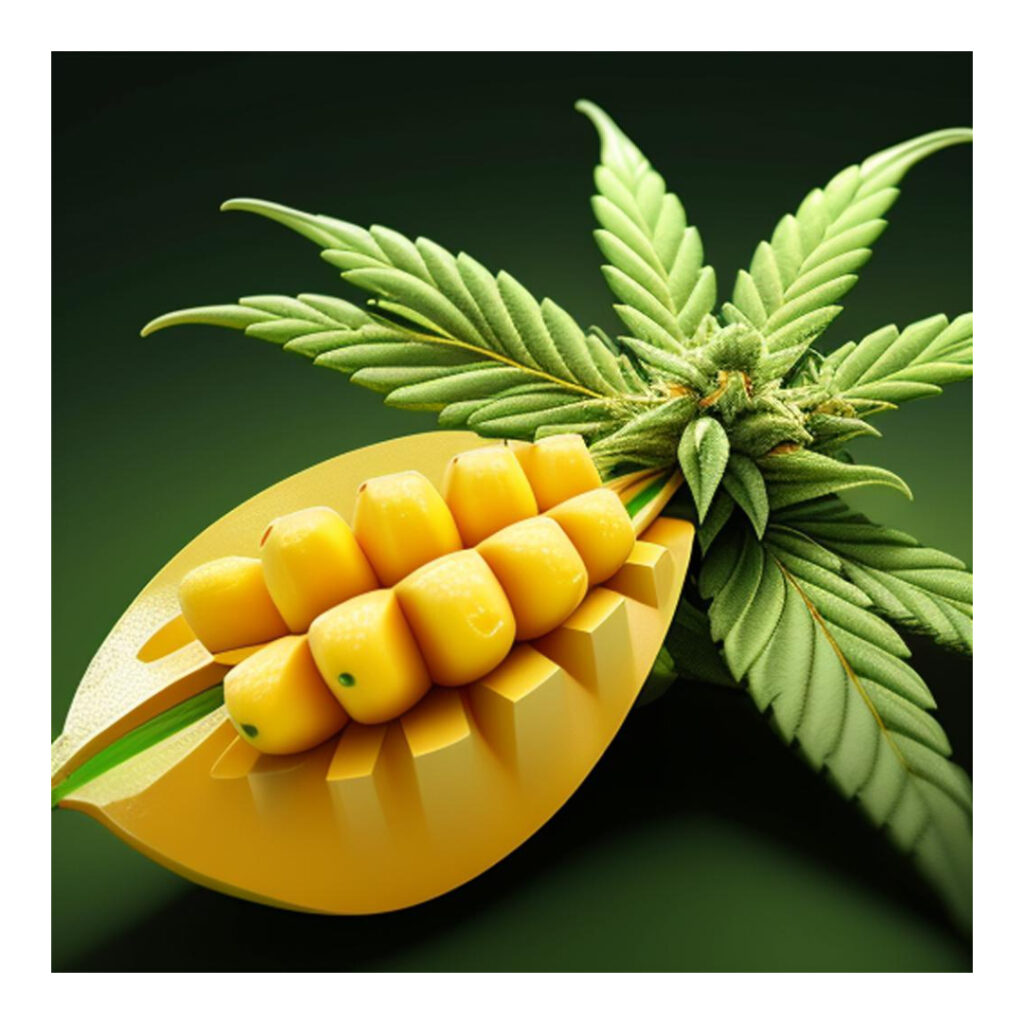
The most common terpene in cannabis. Found in mangoes and hops.
