How to use a dry herb vaporiser
A plain-English guide to what a dry herb vaporiser is, how it heats your prescribed flower without burning it, the different types you may come across, and how to use one safely.
What is a dry herb vaporiser?
A dry herb vaporiser is a device that gently heats dried cannabis flower to make a vapour you breathe in. It does not set the flower on fire. Because there is no flame and no burning, there is no smoke.
Vaporising is not smoking
When flower is burned, it reaches very high temperatures and produces smoke, ash and many by-products of combustion. A vaporiser instead warms the flower to a lower temperature. At this heat the active parts of the plant turn into a fine mist, or vapour, while the plant material itself is left behind. This is why medical cannabis flower in the UK is prescribed for vaporising only, and never for smoking.
- No flame and no burning. The flower is warmed, not set alight.
- No smoke. You breathe in vapour, which clears from the air quickly.
- Controlled heat. Most devices let you choose a set temperature.
- Less waste of the medicine. Vaporising releases the active compounds efficiently at the right heat.
Because a vaporiser makes no smoke and does not burn anything, it is not treated as smoking under smoke-free rules. Even so, always check the rules of the place you are in before you medicate.
The main parts of a vaporiser
Devices vary. Not all vaporisers look the same. The diagrams here show common layouts, but your device may arrange these parts differently, combine some, or leave others out. Use them as a general guide and always check your own device's manual.
Mouthpiece
Where you put your lips to breathe in the vapour. It is usually removable so you can keep it clean, and often forms part of the cooling path.
Mouthpiece and valve
On a bag system you breathe from the valve at the top of the filled bag. On a tube system it is the end of the tube. It detaches for cleaning.
Conduction, convection or hybrid
Vaporisers heat the flower in one of three ways. Knowing which type you have helps you get the best from your medicine and load it correctly. Choose a tab to see how each one works.
Conduction
The flower sits against a hot surface, such as the walls or floor of the chamber. Heat passes straight into the flower by contact, the same way a frying pan warms food.
Good points
- Heats up fast
- Simple and lower cost
- Kind to the battery
Watch for
- Can heat unevenly
- May scorch if too hot
- Stir the flower for an even result
Convection
The heater warms the air, not the flower. As you draw, hot air passes up through the chamber and releases the vapour. The heat source never touches the flower directly.
Good points
- Even, gentle heating
- More flavour
- Vapour mostly on demand
Watch for
- Usually costs more
- Draw slowly and steadily
- Can take longer to warm up
Hybrid
A hybrid uses both methods. The chamber is warmed by contact and hot air also passes through as you draw. This aims to give the fast start of conduction with the even, tasty vapour of convection.
Good points
- Fast start-up
- Even, full vapour
- Flexible for most patients
Watch for
- More to keep clean
- Often a higher price
- Settings vary by model
What temperature does what
Different parts of the flower release their vapour at different temperatures. A lower setting gives lighter, more flavoured vapour; a higher setting gives thicker, stronger vapour. Move the slider to see roughly what happens at each heat. Always follow the range your clinic advises.
A middle setting that most patients start around. It gives a good balance of flavour and effect, with a comfortable vapour.
Burning, or combustion, begins at around 230°C. Staying below this is the whole point of vaporising. If you see smoke or taste a harsh, burnt flavour, turn the heat down.
The different types of vaporiser
Vaporisers vary in three main ways: their size and shape, how they are powered, and how the vapour reaches you. Open each group below to learn more.
Portable
Small, battery-powered and pocket-sized. Good for use out and about. Heats a set amount at a time.
Desktop
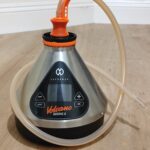
Larger, mains-powered and used in one place. Very steady heat, often used at home for a reliable dose.
On-demand / manual
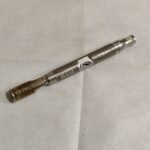
Heated only while you draw, sometimes by a small flame. Very compact, but takes a little practice.
Battery
Rechargeable. Portable and convenient. Charge it fully so the heat stays steady through a session.
Mains
Plugs into the wall. Used by desktop units for a constant, dependable temperature.
Butane flame
A refillable flame heats a manual device. No battery, but needs care and a little practice.
Induction
A separate heater warms a manual device using a magnetic field, for a repeatable heat without a flame.
Direct draw
You breathe straight from the mouthpiece. The most common method on portable devices.
Balloon or bag
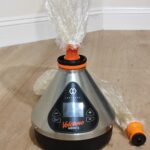
The device fills a bag with vapour, which you then breathe from at your own pace. Common on desktop units.
Water tool
Some devices attach to a water piece that cools and smooths the vapour before you breathe it.
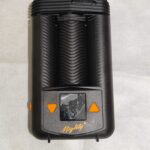
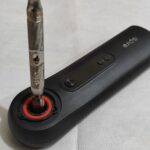
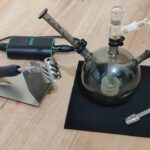
Real devices patients use
A few examples of the kinds of device described above. Click any photo to enlarge it.
Medically certified vs non-certified devices
Any device used to give a medicine is, in law, a medical device. That includes a vaporiser used to take prescribed cannabis flower. What differs is whether the maker has put the device through the checks and certification needed to market it as a medical device.
A medically certified vaporiser has been tested and approved to a recognised standard and carries a certification mark. In the UK you may see a UKCA mark, and on many devices a CE mark, showing the maker has met the medical device rules. A non-certified device may work in a similar way, but it has not been assessed and approved as a medical device.
- Tested and approved as a medical device
- Set temperatures validated for consistent vapour
- Instructions written for medical use
- Examples include the Mighty Medic and Volcano Medic ranges
- Often what a clinic will recommend
- Sold as a general consumer product, not a medical device
- Temperature accuracy is not independently assured
- Build quality and materials can vary widely
- Still counts as a medical device when used for your medicine
- Ask your clinic before relying on one
In short: the moment a device is used to take your prescribed medicine, it is being used as a medical device. Certification tells you it has been checked and approved for that job. If you are unsure which device suits you, ask your prescribing clinic or pharmacy.
How to use your vaporiser, step by step
Move through the seven steps below. Tap a number, or use Back and Next, to follow each stage with a picture to show what to do. This is general guidance only: always follow the manufacturer's own guide for your device, because the exact steps and settings differ between models.
Grind your flower
Break the flower into an even, medium grind using a grinder. An even grind heats evenly and gives better vapour. Avoid grinding it to a fine powder, which can block the screen.
Load the chamber
Fill the chamber loosely. Do not pack it too tightly on a convection device, as air needs to flow through. On a conduction device a snug, even fill works best.
Set your temperature
Choose the temperature your clinic advises. If you are new, start at the lower end and work up. Give the device time to reach the set heat. Some devices, such as manual or flame-heated ones, have no set temperature, or use their own unique controls. For these, follow the maker's guide on heating and timing instead.
Let it heat up
Wait for the ready signal, such as a light, a buzz or a colour change on the screen. Starting before it is ready gives thin, weak vapour.
Draw slowly and gently
Take a slow, steady breath rather than a hard, fast pull. Slow draws let the air warm the flower properly and produce smoother vapour.
Stir if needed
On conduction and some hybrid devices, giving the chamber a gentle stir part-way through helps every part of the flower heat evenly.
Finish and empty
When the vapour thins out and the flower looks brown and dry, the dose is spent. Let the device cool, then tip out the used flower. Keeping the chamber empty and clean between uses protects the flavour and the device. The used, browned flower is known as already vaped bud. Find out what to do with your AVB.
Safety and temperature guidance
- Start low and go slow. Begin at a lower temperature and dose, then adjust with your clinic's advice. You can always take a little more, but you cannot take less back.
- Keep below burning point. If you ever see smoke or taste a harsh, burnt flavour, the heat is too high. Turn it down. Vaporising should never produce smoke.
- Only use your own prescribed medicine. Do not put anything into the chamber other than the flower prescribed to you.
- Look after the battery. Use the charger supplied, do not leave it charging unattended overnight, and keep it away from heat and water.
- Take care with manual and flame devices. They get very hot. Let them cool fully before touching the heated tip or putting them away.
- Keep it clean. A clean device is safer, tastes better and lasts longer. See our cleaning guide below.
- Store it safely. Keep the device and your medicine out of reach of children and pets, in a cool, dry place.
If you feel unwell, very drowsy or anxious after medicating, stop, rest somewhere safe, and contact your clinic. In an emergency, always call 999.
Keep your device clean
A clean vaporiser gives better vapour, protects the flavour of your medicine and lasts far longer. Our step-by-step cleaning guide shows you exactly how.
References and further reading
References follow the Harvard style. External links open the source in a new tab.
- 1Lanz, C., Mattsson, J., Soydaner, U. and Brenneisen, R. (2016) 'Medicinal cannabis: in vitro validation of vaporizers for the smoke-free inhalation of cannabis', PLoS ONE, 11(1). Available at: journals.plos.org (Accessed: 4 August 2026).
- 2Pomahacova, B., Van der Kooy, F. and Verpoorte, R. (2009) 'Cannabis smoke condensate III: the cannabinoid content of vaporised Cannabis sativa', Inhalation Toxicology, 21(13), pp. 1108-1112.
- 3National Institute for Health and Care Excellence (2019) Cannabis-based medicinal products (NG144). Available at: nice.org.uk/guidance/ng144 (Accessed: 4 August 2026).
- 4Medicines and Healthcare products Regulatory Agency (2021) Medical devices: how to comply with the legal requirements in Great Britain. Available at: gov.uk (Accessed: 4 August 2026).
