Endocannabinoid System
PatientsCann UK | The Endocannabinoid System Visualizer Skip to content Science Interactive Peer reviewed sources The endocannabinoid system, explained by exploring your own body Every person reading this has an endocannabinoid system. It is a network of tiny switches, messengers and clean-up crews that keeps the body steady. Tap any part of the body below to see which switches sit there and what they do. PatientsCann UK Education, physiology Written for patients, carers and clinicians On this page The basics Body map How the signal works Makers and breakers What it balances Plant compounds Entourage effect Beyond CB1 and CB2 For clinicians Test yourself References What this page is, and is not This page teaches the science of how the body works. It is not medical advice and it does not recommend any product, dose or treatment. If you think medical cannabis might help you, speak to your GP, your specialist or a clinic on the General Medical Council register. Why this matters It is already yours The system is built into every human body from the first weeks in the womb. Cannabis did not put it there. It keeps you steady Sleep, appetite, pain, mood, movement, temperature and the immune response all get nudged back towards the middle. It is very old Versions of this system appear in animals going back around 450 million years, which is why it is found in so many species. It explains the effects Cannabis compounds work because they fit switches your body already has. Different switches, different effects. Start here Three parts, one job: keeping you steady Your body is a colony of billions of cells. Each cell has its own needs, and they all have to work together. To do that, cells send each other chemical messages. The endocannabinoid system, often shortened to ECS, is one of those messaging networks. Scientists often describe it as a lock and key. The receptor is the lock, sitting on the outside wall of a cell. The messenger molecule is the key. When the right key turns the right lock, something changes inside that cell. The three parts The locks (receptors). Two main ones, called CB1 and CB2. They sit on cell surfaces all over the body and each one changes what its cell does. The keys (endocannabinoids). Fatty messenger molecules your body builds itself. The two main ones are anandamide and 2-AG. The clean-up crew (enzymes). Tools that build the keys when they are needed and destroy them seconds later. The main destroyers are called FAAH and MAGL. The part that surprises people Most messaging systems keep a stock of messengers ready in tiny bags, waiting to be released. The ECS does not. Endocannabinoids are made on demand, cut fresh out of the fatty wall of the cell at the exact moment they are needed, used on the spot, and then broken down. Nothing is stored and nothing travels far. That is why the ECS is so precise. It does not act on the whole body at once. It acts in one small place, for a short time, only where something needs correcting. The word for it is homeostasis. It means keeping the inside of your body steady even when things outside change. Not too hot, not too cold. Not too much pain signal, not too little. The ECS is one of the body’s main tools for doing that. Where the plant comes in The keys your body makes fit the locks perfectly. Compounds from the cannabis plant, called phytocannabinoids, are shaped closely enough to fit the same locks, but they are not identical. Researchers sometimes call them a false key. They turn the lock, but not in quite the same way, not in the same place, and not for the same length of time. That single idea explains almost everything else on this page. Cannabis does not create new effects in the body. It leans on a control system that is already running. It is not the cannabis plant that has many effects, it is the endocannabinoid system that determines them. Dr Mariano Garcia de Palau, Fundacion CANNA Interactive body map Where the receptors are, and what they do there Tap a numbered marker on the body, or a name in the row underneath. CB1 markers are green, CB2 markers are purple, and places with a real mix of both are teal. Show Everything CB1 only CB2 only 13 regions to explore CB1 CB2 Both, in real numbers A note on the drawing. The illustration shows the main organs from the front. Each marker sits over the area that region covers, so a few point at parts that sit deeper in the body. The immune marker sits on a cluster of lymph nodes, and nerves and skin reach everywhere, so those markers show one place out of many. Step by step How one nerve cell tells another to calm down Nerve cells talk across a tiny gap called a synapse. Normally messages travel one way. The ECS is unusual: its message travels backwards. Step through it below. Presynaptic sending neuron Postsynaptic receiving neuron the synaptic gap vesicles CB1 receptor on the sending cell receptors glutamate or GABA Ca2+ up DAGL 2-AG cut from the cell wall backwards fewer messages sent MAGL broken down in seconds Back Next step Why the backwards direction matters. The cell that is getting too much noise is the one that turns the volume down, at the exact synapse where the noise is coming from. Nothing else in the body is affected. This is called retrograde signalling, and it is the reason cannabinoids can quieten over-firing nerves without shutting the whole nervous system down. The cast The makers, the messengers and the breakers Six molecules do most of the work. Two carry the message, two build them, two destroy them. Tap any name. The others, in brief Anandamide and 2-AG get the attention, but the body makes more: Noladin ether and virodhamine, both weaker relatives. Virodhamine may work against
Seed To Patient
Skip to the explorer PatientsCann UK · Patient education From Seed to Patient: the UK medical cannabis pipeline Every legal prescription in the UK travels the same route: a controlled growing room, a licensed factory, an accredited laboratory, a border, a specialist clinic and a pharmacy. This explorer walks you through all six stages, compares the seven formats a patient can be prescribed, and shows you how to read the paperwork that proves it. 6 regulated stages 7 patient formats Quality and science inspector This is education, not medical advice. Onset and duration figures are typical ranges reported for each route. Your own response depends on your dose, your product and your body. Never change how you take your medicine without speaking to your prescriber or pharmacist. See all patient resources 1 The seed to shelf journey 2 Formats and delivery pathways 3 Quality and science inspector The six stages of a legal UK prescription Select any stage to open the detail. Each one has its own quality standard and its own regulator, and a batch cannot move forward until the stage before it has been signed off. 1Genetics and GACP growing 2GMP processing and extraction 3Laboratory testing and CoA 4Licensed import and border 5Specialist prescribing 6Pharmacy dispensing Stage 1 of 6 1 Genetics, breeding and GACP cultivation Where the medicine starts: a known plant, grown the same way every time. Standard GACPRegulator DEFRA and origin inspectors What happens here A licensed grower keeps a small number of mother plants and takes cuttings from them, often through tissue culture, so that every crop is genetically the same plant rather than a new cross. Growing rooms are closed loop: light, temperature, humidity, carbon dioxide and air filtering are all controlled and logged. Mother plant care and cutting or tissue culture cloning Batch to batch genetic stability, checked crop by crop Sealed rooms with filtered air and monitored water feeds Quality standard GACP (Good Agricultural and Collection Practice). It sets how the plant is grown, fed, harvested and handled. In practice it means no synthetic pesticides, and soil, water and fertiliser chosen so the plant does not draw heavy metals up into the flower. Where the flower is dispensed as it is, GACP alone is not enough: the maker has to write down the point at which production of the active substance begins, and for whole flower that point is the growing room. Who regulates it DEFRA in the UK, alongside the agricultural inspectors of the country the crop is grown in. Growers are inspected and have to keep records for every batch they release. One decision sets the whole rulebook What the crop is going to become decides where pharmaceutical rules start. It is the single most important point in the chain, and the one most often got wrong. If the flower itself is the medicine The plant is the active substance Propagation Cultivation and flowering Harvest, drying, curing Packed flower, dispensed as it is Annex 2, biological medicines Nothing downstream can purify or sterilise a dried bud, so quality has to be built in from the cuttings onward. Annex 2 recognises that manufacture can begin at propagation. If the flower will be extracted The plant is a starting material Propagation Cultivation and flowering Harvest and drying Extraction and formulation Annex 7, herbal starting materials Here quality is defined later. Extraction, filtering and purification can take impurities out, so the plant is grown under GACP and pharmaceutical rules begin at the processing step. Why sameness matters A prescription only works as medicine if the next jar behaves like the last one. Controlled genetics and controlled rooms are what let a pharmacist put a fixed cannabinoid percentage on a label. Illicit supply has none of this: the same street name can be a different plant, grown a different way, with a different strength every time, and nobody has tested it. Next: GMP processing 2 Pharmaceutical processing and GMP extraction The crop becomes a pharmaceutical product in a cleanroom. Standard EU and UK GMPRegulator MHRA What happens here Harvested flower is dried and cured at a set temperature and humidity, then milled to a controlled particle size for vaporising. For oils and cartridges the plant material goes through supercritical carbon dioxide extraction, then winterisation to strip out fats and waxes, with any solvent recovered and accounted for. Controlled drying, curing and precision milling Cold carbon dioxide extraction under pressure Winterisation, filtration and solvent recovery Standardising the extract to a fixed cannabinoid strength Quality standard EU and UK GMP (Good Manufacturing Practice). Work happens in cleanrooms with ISO class 5 and class 7 air handling and positive air pressure, so air always flows out of the clean space rather than into it. Every step is written down, signed and traceable to the batch. The rulebook is EudraLex Volume 4: Part I for finished medicines, Part II for active substances, and Annex 2 for medicinal cannabis intended for use as whole flower. Quality risk management sits across all of it. Who regulates it The MHRA, the UK medicines regulator. A site that makes or releases a medicine for UK patients has to hold and keep its GMP certification through inspection. Three routes out of the same growing room Where GACP stops and GMP starts depends on what the batch is going to become. Requirements tighten at every step closer to the patient. GACP, pre harvestGMP, post harvestGood distribution practice Bulk flower for extractionMother plantsRooting and hardeningLarge scale cultivationharvestFast fan assisted dryingMachine trimmingBulk packaging and shippingExtractionActive ingredientFormulationFilling and packaging Sold on as feedstock, so the later GMP steps happen at another site. Extracts, including oils, hash and rosinMother plantsRooting and hardeningLarge scale cultivationharvestFast dryingMachine trimmingExtractionActive ingredientFormulationFilling and packagingDistribution Processing can remove impurities, so the finished extract is standardised before it is filled. Finished packaged flower (Flos)Mother plantsRooting and hardeningSmall scale cultivationharvestWet hang harvestSlow cool dryingHand trimmingCuringPackagingDistribution Covered end to end by GMP Annex 2. The flower itself is the finished medicine, so nothing can be cleaned out of it
What Lucy McCarthy Told Us
PatientsCann UK | What Lucy McCarthy told us Skip to content Patient interview Workplace Rights In her own words What Lucy McCarthy told us A tribunal judgment records findings. It does not record what the year felt like for the person at the centre of it. After the decision in her case was published, Lucy McCarthy spoke to PatientsCann UK, and asked us to share what happened so that other patients might be spared some of it. PatientsCann UK News & Advocacy Patient interview On this page Her account What she would change For patients Support References How to read this page This is a first-hand account, given to PatientsCann UK directly by Lucy McCarthy and published with her consent. It is her recollection. We have not independently verified it, and in places it differs from what the employment tribunal found. Where it does, we say so. The published judgment remains the legal record of the case. Nothing here is legal or medical advice. In her own words What happened, as Lucy describes it Her account The job she was doing Lucy worked for the council as a work coach for young people aged 18 to 25 who are autistic or have ADHD. It was support work, built on trust and continuity with young people who often find both hard to come by. Her account Driving was not part of the role This is where her recollection and the tribunal’s description part company most clearly. Lucy says her job carried no driving requirement at all. Most journeys between work locations were walkable, so she generally walked, and she occasionally used her own vehicle during working hours. By the time she went off sick, carrying service users in an employee’s own vehicle was completely prohibited in any case. She also says there were no legal restrictions stopping her from driving while taking prescribed medical cannabis, provided she was unimpaired, and that she held the appropriate business insurance. She had explained to her employer that, as with any other medicine, she was the person legally responsible for deciding whether she was impaired and fit to drive. The tribunal, on the evidence before it, described a role involving some driving around the district and occasionally transporting service users, and treated that as part of why the employer was entitled to ask for more information. Lucy’s position is that the driving element was incidental, personal and small, and that it became the centre of a case it never really belonged in. Her account Depression came first Around August her depression became severe. During that period she used cocaine and became dependent on it, and she is candid that it sent her into a spiral. She did not hide any of it. She talked to colleagues about what was happening to her, and as she describes it now, she was asking for help. Depression, not cannabis, was the thread running through everything that followed. She spent time in and out of hospital and care. Through all of it, she says, she wanted to get back to work, and she did everything she could think of to make that possible. Her account What she handed over, and when they asked for more In November 2023 she gave her line manager the clinic’s initial consultation letter, along with supporting information and research she had gathered herself. She had not yet accessed the clinic’s online portal, so she did not have the prescription itself to give them. Nobody asked her for the prescription, or for any further documents, until February 2024. That was more than three months later, and by then she had already started the grievance and ACAS process. Her account is that the paperwork she did provide was not passed on to anyone else, and that the delays and repeated requests grew out of that gap rather than out of any refusal on her part. Her account Four Employee Healthcare assessments in about four months She was assessed four times over roughly four months. As she describes the sequence: She was extremely low and suicidal, and struggling to manage her emotions. This was around the time she admitted herself to a psychiatric hospital. Her anxiety and depression scores had improved a great deal. She was fit to return and wanted to, but was kept off because of concerns about her cannabis use, and because she was not engaging with NHS treatment she did not think was right for her. She was again found fit to return, but the report was said not to contain enough detail about the cannabis for her employer’s purposes. She was again found fit to return, and this time the report went into more detail about the cannabis, including the strain, the strength and its effects. Three of the four assessments found her fit for work. What kept changing, on her account, was how much detail her employer wanted about the medicine rather than anything about her ability to do the job. Her account Two months lost trying to get back From February to April, while she was trying to return to work, her employer sought to make not driving during working hours a condition of her return, including in a formal risk assessment. Lucy declined that condition. She says the standoff delayed her return by around two months. She was eventually allowed back in April, and allowed to drive during working hours. Her account Other medicines, handled differently Her employer already knew she had been taking other medicines that can cause impairment, including the antipsychotics aripiprazole and risperidone. On her account, none of that led to an Employee Healthcare referral, a restriction on her driving, or a risk assessment about driving at all. The contrast is central to how she understands what happened. The same concern, applied consistently, would have been raised about the earlier medication too. Her account Still waiting on the right diagnosis Alongside all of this she was untangling her own medical history. Her formal diagnosis is
Why a motorsport team sponsored a motorsport team
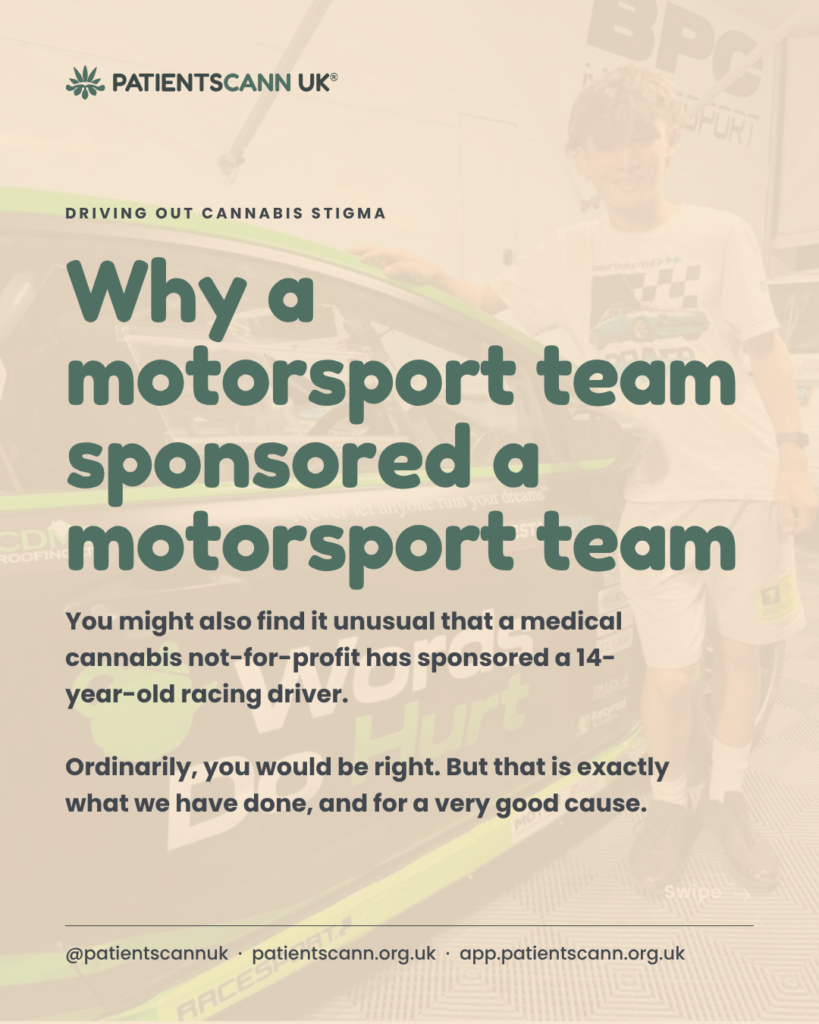
Why a Motorsports Team Sponsored a Motorsport Team | PatientsCann UK® Skip to content Sponsorship Words Do Hurt Driving Out Cannabis Stigma Why a Motorsports Team Sponsored a Motorsport Team You might find it unusual for one motorsports team to sponsor another motorsport team. By PatientsCann UK® Motorsports Team Thomas Potter Racing Words Do Hurt Words Do Hurt campaign On this page Thomas Potter Racing Words that hurt patients Why we chose to support More than sponsors Best of luck, Thomas References You might also find it unusual that a medical cannabis not-for-profit has sponsored a 14-year-old racing driver. Ordinarily, you would be right. But that is exactly what we have done, and for a very good cause. The driver Introducing Thomas Potter Racing Thomas Potter is a 14-year-old racing driver competing in the Fiesta Junior Championship, following a successful karting career that included more than 100 race wins and six championships. However, Thomas Potter Racing is about far more than results on the track. Thomas has used his growing motorsport platform to support children and adults affected by bullying and poor mental health. His experiences inspired the Words Do Hurt campaign, which has been raising awareness of bullying, mental health and the importance of asking for help since 2020. Thomas experienced negativity, abuse and hurtful comments while pursuing his motorsport ambitions, including criticism linked to competing on a limited budget. Rather than allowing those experiences to drive him away from the sport he loved, he used them to help others who were going through similar situations. The campaign carries a simple but powerful message: Words do hurt. Words Do Hurt campaign Names added to the Words Do Hurt race car, Thomas Potter Racing. A Words Do Hurt campaign message: bullying costs lives. That message is displayed through Thomas’s racing, campaign vehicles, event appearances and work within the community. The project aims to use motorsport to start conversations in schools, colleges, race paddocks and community spaces about bullying, mental health and kindness. Thomas also invites people affected by bullying to add their names, or the names of people they want remembered or represented, to his vehicles. In doing so, every name becomes part of the campaign and travels with the team. A shared experience Medical Cannabis Patients Know That Words Hurt The experiences of medical cannabis patients are obviously different from those of a young racing driver facing bullying. However, the central message of the campaign will feel painfully familiar to many people in our community. Medical cannabis patients know first-hand that words do hurt. Patients can receive negative comments simply because of the medicine they have been legally prescribed. They may be called drug users, addicts or criminals, even when they are following specialist medical advice and using their treatment responsibly. A prescription can be dismissed as an excuse. A patient’s medical condition can be questioned. The smell of prescribed cannabis flower can cause strangers to make immediate assumptions about somebody’s behaviour, character or ability. These are not harmless words. They can make patients afraid to use their medicine in public, disclose it at work or speak honestly about their treatment. They can leave people feeling ashamed of something that is part of their healthcare. PatientsCann UK® exists to challenge those assumptions, provide practical support and ensure patients do not have to face them alone. Our motorsport team carries that mission onto the track by Driving Out Cannabis Stigma, promoting visibility and fair, evidence-based access for legally prescribed patients. The Words Do Hurt campaign and Driving Out Cannabis Stigma come from different experiences, but they share an important principle: Nobody should be defined or driven out of something they love by the words and assumptions of other people. PatientsCann UK® The decision Why We Chose to Support the Campaign When we learned more about Thomas, his racing and the purpose behind Words Do Hurt, supporting the campaign felt entirely natural. This was not about one motorsport team paying to place its logo beside another racing car. It was about two motorsport projects supporting a shared belief that the sport can be used to make people feel seen, represented and less alone. Sal Aziz, founder of the PatientsCann UK® Motorsports Team and Director of PatientsCann UK®, therefore personally funded a sponsorship position to support Thomas Potter Racing and the Words Do Hurt campaign. We are absolutely delighted that PatientsCann UK® Motorsports Team and Driving Out Cannabis Stigma appears on the team’s partners banner. The words “Cannabis Patients” have been added to the TPOT, ensuring that our community is represented alongside others who have been affected by bullying, hurtful language and stigma. The words “Cannabis Patients” added to the TPOT, Thomas Potter Racing. PatientsCann UK® on the Thomas Potter Racing partners banner. Those two words represent thousands of people. They represent patients who have been judged because of a smell. They represent people who have hidden their medication because they feared how others might react. They represent patients who have been excluded from work, volunteering, sport or ordinary public life because somebody saw the word “cannabis” and stopped seeing the person. Having “Cannabis Patients” written on the TPOT is a small but meaningful act of visibility. It says that our community belongs within this conversation and that stigma against patients should never be dismissed as harmless banter. Visibility Motorsport Can Carry More Than Sponsors A racing car usually carries the names of businesses, products and commercial partners. Thomas Potter Racing demonstrates that it can carry something more. It can carry people’s stories. It can carry the names of those who have been hurt. And it can carry a message into paddocks and communities that might otherwise never hear it. The Words Do Hurt campaign uses motorsport as a starting point for conversations about bullying and mental health, and Thomas’s story encourages young people to ask for help and continue pursuing their ambitions. That is something PatientsCann UK® is proud to stand beside. We know from our own work that visibility
Why We Started a Motorsports Team

Why a Medical Cannabis Not-for-Profit Started a Motorsports Team | PatientsCann UK® Skip to content Founder’s story Medical cannabis & motorsport Driving Out Cannabis Stigma Why a Medical Cannabis Not-for-Profit Started a Motorsports Team Before I knew medical cannabis was legal in the UK, motorsport was already my life. By Sal Aziz PatientsCann UK® Motorsports Team Founder’s story Team launch · Thruxton On this page Getting through the gate Becoming a patient When my case became policy Finding another route Why I have to race References One of my earliest racing memories is being told off for swearing after losing on Need for Speed: Underground. In my defence, I was only replicating my father! A few years later, he introduced me to Formula 1 after Lewis Hamilton joined the grid. I began watching properly in 2008 and was immediately hooked, waking at the crack of dawn when needed to see every race live. The highlight was Brazil 2008. My father walked out during the final lap, believing the championship was over, moments before Martin Brundle exclaimed: “Is that Glock?!” I had to scream for him to come back. I wanted to be part of that world, but racing appeared impossibly expensive. Even arrive-and-drive karting was beyond my budget. Then I discovered marshalling. Getting in Getting Through the Gate In 2021, I attended American SpeedFest at Brands Hatch. COVID restrictions meant unusually small crowds, giving the freedom to explore. Watching the marshals made me realise there was no reason I could not join them. I volunteered and was immediately hooked. Driving onto a circuit for the first time, even at 30 mph to reach my post, felt momentous. I was finally part of motorsport rather than watching from behind a screen or spectator fence. I went on to marshal events ranging from grassroots racing at Anglesey to the British Touring Car Championship and Goodwood Festival of Speed. I can even add “told Gordon Ramsay where to park at Goodwood” to my CV. Sal marshalling at Goodwood, as seen on Sky Sports F1. (Image source: Sky UK, used for illustrative purposes under Fair Dealing). “Told Gordon Ramsay where to park at Goodwood.” (Image source: Sky UK, used for illustrative purposes under Fair Dealing). I also competed in car trials, taking my Daewoo Lacetti off-road to see how far it could travel through marked sections. It was not Formula 1, but it was affordable, competitive and enormous fun. Author competing in a car trial (Image source: Woolbridge Motor Club, used for illustrative purposes under Fair Dealing). Treatment Becoming a Patient After a road trip through the Netherlands and an eventual drug-driving investigation in which I was found to be below the applicable limit, despite testing a wide range of cannabis products, I began exploring medical cannabis through the proper clinical route. My initial consultation took place on a Saturday morning at Silverstone before a day of marshalling. Once I began treatment, I noticed immediate improvements. Chief marshals commented positively on my performance. I completed the required health declarations and passed my flag assessment while openly prescribed medical cannabis. Author flag marshalling at the NASCAR Whelen Euro Series (Image source: GP1, used for illustrative purposes under Fair Dealing). Flag marshalling requires concentration, communication and rapid decisions in a safety-critical environment. I performed that role successfully and was excited to return to Goodwood for a second year, this time in the Supercar Paddock. Then a member of the public reported a marshal using cannabis. The report The Report That Began With a Smell I immediately acknowledged that the cannabis was mine and explained that it was legally prescribed for anxiety. I expected that explanation to resolve the concern. Instead, I was removed from post while senior Motorsport UK personnel were contacted. I was eventually permitted to continue in the lower-risk Supercar Paddock while the matter was reviewed. No performance failure or near miss had prompted the intervention. My medicine had become visible because of its smell. An odourless tablet may remain private. Cannabis flower can announce a patient’s treatment before they choose to discuss it. Smell is not evidence of impairment, but it can activate assumptions inherited from cannabis prohibition. That report eventually became much bigger than my individual case. Policy When My Case Became Policy In February 2024, Motorsport UK introduced Version 1 of a new signing-on declaration. It asked officials and marshals to confirm that they did not have disabilities or mental-health conditions, use drugs on the WADA Prohibited List, or take medication that might affect their duties. Motorsport UK later explained that the change followed reports during 2023 involving physical capability, mental health and the “substance use of colleagues”. I recognised myself in two parts of that explanation. Anxiety was my declared mental-health condition. Prescribed cannabis was my treatment, but it was apparently being framed as “substance use”. Although I was not named, the description reflected the defining features of my case. Version 1 of the officials declaration. Version 1 backfired horribly. Disabled volunteers and marshals taking medicines including blood thinners and asthma treatments began questioning whether they were still eligible. Medical cannabis was also independently identified as a problem. Within days, Motorsport UK issued Version 2, returning to a more sensible functional question: did the person’s condition or treatment adversely affect their duties? Version 2 of the officials declaration. But medical cannabis remained explicitly prohibited. My interpretation is that Version 1 attempted to capture cannabis through broad language about mental health, medication, “substance use” and the WADA list without initially announcing a cannabis-specific ban. When that language affected too many other volunteers, it was reversed, but cannabis patients remained excluded. I cannot prove the private intentions of those who wrote the policy. What I can say is that my case was followed by Version 1, the backlash, Version 2 and ultimately a categorical medical cannabis prohibition. Motorsport UK Public UK Licence Suspensions Register. Responsibility The Ban Is Not My Fault, but It Followed My Case I did not ban medical
Race Report Thruxton Retro
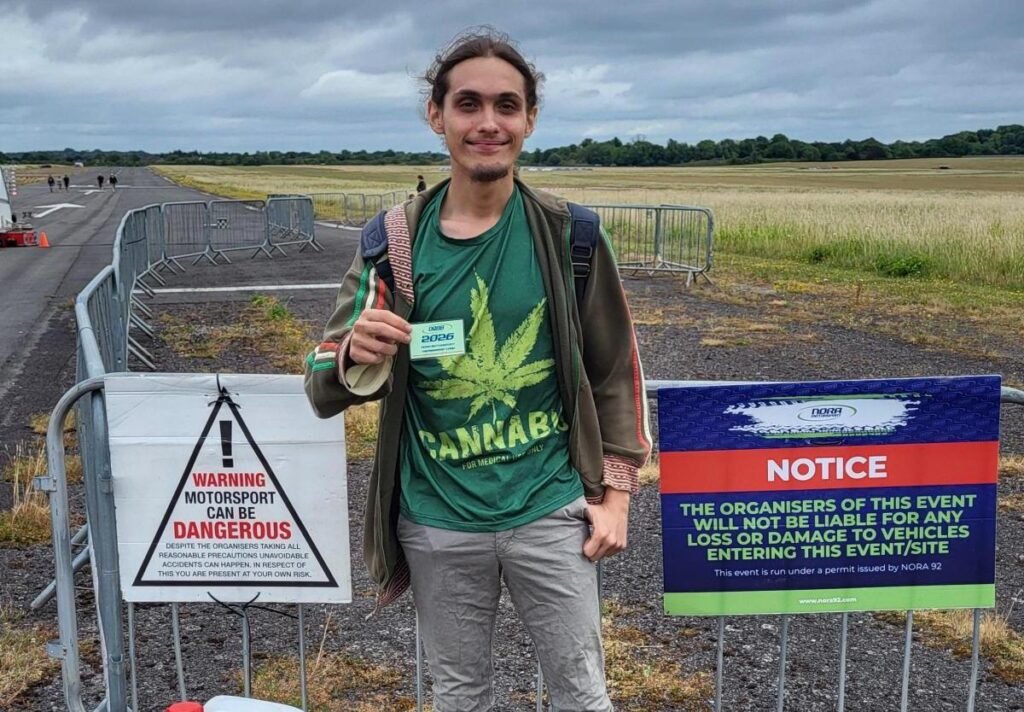
Race Report: Thruxton Retro, 4 July 2026 | PatientsCann UK® Skip to content Race report Thruxton Retro Team launch Race Report: Thruxton Retro, 4 July 2026 The PatientsCann UK® Motorsport Team successfully launched at Thruxton Retro on 4 July 2026, with founder Sal Aziz completing 15 drag-racing runs in his Vauxhall Insignia estate. By PatientsCann UK® Motorsports Team Race report Thruxton, 4 July 2026 15 runs completed On this page Preparing the car Arrival at Thruxton A green light Racing through the middle Fifteen runs Just the beginning References After securing a NORA Motorsport licence with his medical cannabis prescription declared, Sal immediately began looking for an opportunity to return to competitive motorsport. Thruxton was the natural choice. It was the circuit where Sal had first entered motorsport as a marshal, making it the perfect place to relaunch his motorsport career from behind the wheel. The build Preparing an Unlikely Race Car Preparation for the event was suitably grassroots. Sal crudely applied a cannabis-themed livery to his Vauxhall Insignia estate before we posted a teaser on social media. Despite the appearance, we were generating attention before the car had even reached the start line. The teaser: a cannabis-themed livery applied to the Vauxhall Insignia estate. Livery detail: a sports team for cannabis patients. The Insignia was not built for drag racing. It is a diesel estate, complete with a roof box, rather than one of the specially prepared machines normally associated with the drag strip. The team knew the Insignia was unlikely to be competitive against dedicated racing machinery. The first objective was simply to take part. A diesel estate with a roof box in the paddock, among purpose-built machinery. Race day Arrival at Thruxton Sal drove to Thruxton feeling the familiar mixture of excitement and nerves that accompanies any motorsport event. This time, however, those emotions were amplified by everything he had experienced in the sport. This was more than his first drag-racing event. It was his return to competitive motorsport as an openly prescribed medical cannabis patient. It was also the public launch of a team created to challenge the stigma and exclusion patients continue to experience. On arrival, event staff were understandably surprised to discover that the Vauxhall Insignia estate with a roof box was there to race. But one of the attractions of a Run What You Brung event is contained in the name: almost anything can be raced. Sal was directed to Thruxton’s runway, which had been transformed into a drag strip for the event. After signing on, the Insignia passed scrutineering and was cleared to take part. The unlikely race car was ready. Thruxton’s runway, transformed into a drag strip for the event. Launch A Green Light for the Team Sal drove into the staging area and joined the queue alongside a remarkable mixture of machinery. The entry included purpose-built drag cars, powerful performance vehicles, modified classics and ordinary road cars. As he moved towards the front of the queue and began staging at the lights, the significance of the moment finally sank in. To an observer, it may have looked like somebody preparing to drive an estate car quickly down a straight runway. To Sal and PatientsCann UK®, it represented something far greater. A medical cannabis patient who had been excluded from one pathway into motorsport had found another. He had declared his prescription, obtained a licence, passed scrutineering and reached the start line through the relevant processes. The lights changed. Sal accelerated down Thruxton’s runway. With that first green light, the PatientsCann UK® Motorsport Team was officially launched. Staging at the lights on Thruxton’s runway. The PatientsCann UK® Motorsports Team launch at Thruxton Retro. Symbolism Racing Through the Middle The location made the moment especially symbolic. Thruxton’s runway sits inside the main circuit. While Sal completed his runs under the NORA and Straightliners framework, Motorsport UK-regulated activity was taking place on the circuit around him. He was literally racing in the middle of the motorsport environment from which prescribed medical cannabis patients had been excluded under a different governing system. Same patient. Same prescription. Same condition. Different governance. PatientsCann UK® Motorsport Team The contrast demonstrated why PatientsCann UK® believes that transparent, evidence-based participation processes are possible. Safety remains essential, but automatic exclusion is not the only way in which a governing body can respond to legally prescribed medication. The results Fifteen Completed Runs 15 Completed runs 11.07s Best time 64mph Top terminal speed Once the first-run nerves had settled, Sal returned to the staging lanes repeatedly throughout the day. He raced against everything from specialist drag machinery to conventional road cars. Unsurprisingly, the diesel estate was not troubling the fastest competitors, but outright performance was never the primary objective. The official results record 15 completed runs. Sal’s best time was 11.07 seconds, with his runs generally finishing at between 61 and 64 mph. His highest recorded terminal speed was 64 mph. More importantly, Sal participated consistently throughout the event while managing and using his legally prescribed medication. One event cannot establish that every medical cannabis patient is suitable for every motorsport role. Patients, roles and circumstances differ. However, the day demonstrated that a prescribed patient could disclose their medication, follow a governing body’s process and participate repeatedly in a live motorsport environment. One of 15 completed runs down Thruxton’s runway. Perspective More Than a Result There were no trophies for the PatientsCann UK® Motorsport Team at Thruxton Retro, and the Insignia estate did not suddenly become a thoroughbred drag car. The achievement was reaching the start line at all. Each completed run made medical cannabis patients visible within motorsport for the right reasons: participating openly, following the rules and contributing to the event alongside everyone else. The day also showed what accessible motorsport can look like. Sal did not arrive with a purpose-built car, a professional crew or a huge racing budget. He arrived in his everyday Vauxhall estate with a homemade livery and a roof box. And he raced it.
Psychiatric Patients Left in the Dark
Medical cannabis clinics refusing psychiatric patients | PatientsCann UK Skip to content News & Analysis Patient Rights Your Voice Counts Left in the dark: are private cannabis clinics turning their backs on psychiatric patients? Since a landmark coroner’s finding and the launch of Oliver’s Law, some private clinics appear to have swung from open doors to closed ones. We are hearing from patients who have been refused, discharged or flagged, often without a clear reason or a chance to reply. Here is what is happening, why it matters, and exactly what you can do. PatientsCann UK News & Advocacy Updated 10 August 2026 On this page What is happening Oliver’s story Our position Curaleaf responds Unmet need The cost Business reality A patient’s story What you can do SAR guide Share your experience References Please read gently This article touches on mental illness and, briefly, on the loss of a life. It is written with care, but please read at your own pace and step away if you need to. If you are struggling or in crisis, you are not alone: you can call the Samaritans free, day or night, on 116 123, or text SHOUT to 85258. This page is general information and support, not legal or medical advice. So you can read at your own pace, the most sensitive wording is hidden by default. Use the button to show it all, or tap any hidden word to reveal just that part. Show sensitive wording Why this matters A pattern, not one clinic Patients across several clinics report sudden refusals and discharges tied to mental health history. Safety and fairness Safe prescribing matters. So does the right to an individual assessment, accurate records and a fair review. You have rights You can see your records, correct mistakes and be heard. This page shows you how, step by step. The shift From open doors to closed ones For years, private medical cannabis clinics built their reputations on access and care. They advertised low barriers to entry and a compassionate approach to conditions the NHS often struggles to manage. For many patients, that promise was real, and life-changing. Recent months tell a more worrying story. Following greater regulatory pressure and a coroner’s report about prescribing safety, some clinics appear to have moved into a defensive crouch. Rather than working with patients to deliver safe, individual care, a number seem to be quietly closing the door on people with a mental health history, sometimes the very people who were welcomed a year or two ago. We want to be clear and fair. Some caution is understandable, and safe prescribing is not optional. But caution should mean better assessment, not blanket exclusion. When a clinic refuses or discharges someone without a proper look at their situation, and without a chance to reply, that is not safety. That is a patient being left in the dark. A pattern reported across the community This is not about a single clinic. Patients sharing their experiences on platforms such as Reddit and Facebook describe a wider trend, and while every case is different, the themes are strikingly consistent. These are patients’ own accounts, not statements from the clinics. Three concerns come up again and again: Screening at the door Some applicants say that declaring a mental health condition now brings a high chance of rejection, particularly for new patients. Misread records Others report being turned down over old or miscategorised GP notes, then having to file a Subject Access Request and wait weeks just to prove the notes were wrong. Lost continuity Some long-term patients say they have suddenly lost access to a settled prescription, leaving them without the continuity of care they relied on. Clinics patients have raised similar concerns about Curaleaf Medicann Mamedica Integro Patients have described experiences like these with the clinics listed above on public platforms such as Reddit and Facebook. These are patients’ own accounts rather than statements from the clinics, individual circumstances vary, and this list reflects what we have seen so far. We contacted each clinic named here and invited them to respond to the concerns raised in this article. None of them replied by the time we published, and we will gladly add or update their responses if they get in touch. In fairness, Curaleaf Clinic has separately issued a formal response in Oliver’s case, a public letter to the coroner rather than a reply to us, which we set out in what Curaleaf says. If your experience involves another clinic, please tell us using the form below. Share your experience If this has happened to you, please know it is not a reflection of your worth as a patient or a person. A refusal is a decision about a process, and processes can be questioned, corrected and appealed. The background Oliver’s story, and why clinics are reacting To understand the change, it helps to understand what came before it. Much of the current caution traces back to one deeply sad case, and to the campaign his family began in his memory. Oliver Robinson was 34. He lived with recurrent depression and a diagnosed dependency on cannabis. What happened to Oliver, and the inquest that followed, led to the first finding of its kind in the UK. We share the timeline below with care and respect for his family. Apr 2022 A prescription after one video call After a single video consultation, Oliver was prescribed high-strength medical cannabis for depression. Reports state the clinic relied on GP records printed around nine months earlier and did not contact his other treating psychiatrists first. Curaleaf disputes parts of this account and says the decision was approved by a multidisciplinary team; see what Curaleaf says. 2022-23 His health declined Over around 18 months his mental health grew more fragile. His healthcare professionals and family saw the cannabis as an obstacle to his recovery, and the prescription was seen to reinforce a dependency rather than easing it. Nov 2023 Losing Oliver On
prenylthiol
3-Methyl-2-butene-1-thiol: Aroma, Smell and Safety | PatientsCann UK Skip to main content Back to Sulphur Compounds Guide SVSC3 3-Methyl-2-butene-1-thiol prenylthiol, prenyl thiol, VSC3 pronounced: three-METH-il two-BYOO-teen one-THY-ol The number one skunk molecule. The main reason strong cannabis smells the way it does. Skunk & dieselFormula: C5H10SExtremely potent Aroma familySkunk FormulaC5H10S Mass102.20 g/mol Main noteSkunky 3-Methyl-2-butene-1-thiol · 102.20 g/mol The molecule Chemical structure This is the accurate skeletal structure of 3-Methyl-2-butene-1-thiol, drawn from PubChem data. Each corner and line-end is a carbon atom. The yellow S marks sulphur, the atom that gives this whole family its powerful smell. SkunkyGassySulphurousPungent About What is 3-Methyl-2-butene-1-thiol? 3-Methyl-2-butene-1-thiol is the molecule most responsible for the strong, skunky smell people link with cannabis. It is often called prenylthiol. In 2021 a research team led by Iain Oswald pinpointed it as the number one skunk odorant in the plant. It carries a small chemical part called a prenyl group. This same building block turns up all over the cannabis plant, which may be why the smell feels so specific to cannabis. What the research says The Science Using a very sensitive method (two-dimensional gas chromatography with sulphur detection), the team measured this compound across many cultivars. The more of it a plant had, the more strongly people rated its skunky smell. It is powerful in tiny amounts. Even at a few parts per billion the nose picks it up easily, which is why a little goes a very long way. Aroma snapshot How 3-Methyl-2-butene-1-thiol Smells Skunk & diesel family SkunkyGassySulphurousPungent Smell strength: Extremely potent Detectable at just a few parts per billion. A tiny trace can fill a room. You might also smell it in: Skunk spray, and beer that has been left in the light (so-called “lightstruck” beer). Its role in the smell Part of the Whole On its own it smells purely skunky. Mixed with the fruity and piney terpenes, it helps give each cultivar its signature aroma. It sits alongside terpenes and cannabinoids as part of the plant’s full character. Good to know A Note on Safety 3-Methyl-2-butene-1-thiol is an aroma compound, present in cannabis in trace amounts. It is not a medicine and has no dose of its own. What matters for you is the whole product and how it is prescribed. Always choose and adjust your medicine with your prescriber and pharmacist, never by smell alone. Questions 3-Methyl-2-butene-1-thiol: Common Questions Is this what makes cannabis smell skunky? Yes. Research from 2021 found that 3-methyl-2-butene-1-thiol is the main molecule behind the classic skunky smell. The more a plant makes, the skunkier it tends to smell. Is it related to skunk spray or garlic? It belongs to the same broad family as the smelly molecules in skunk spray and garlic, called volatile sulphur compounds. That shared family is why all three can smell so strong. PreviousDimethyl trisulphide NextPrenyl thioacetate Back to full Sulphur Compounds Guide Important: This page is for education only. It is not medical advice. Research into cannabis sulphur compounds is very new, and most work so far is about smell, not treatment. The garlic comparison is about chemistry, not proven health effects. Always speak to your prescriber before changing your treatment. PatientsCann UK does not recommend any specific cannabis product. References Oswald, I.W.H., Ojeda, M.A., Pobanz, R.J., Koby, K.A., Buchanan, A.J., Del Rosso, J., Guzman, M.A. and Martin, T.J. (2021) ‘Identification of a new family of prenylated volatile sulfur compounds in cannabis revealed by comprehensive two-dimensional gas chromatography’, ACS Omega, 6(47), pp. 31667-31676. doi: 10.1021/acsomega.1c04196. Russo, E.B. (2011) ‘Taming THC: potential cannabis synergy and phytocannabinoid-terpenoid entourage effects’, British Journal of Pharmacology, 163(7), pp. 1344-1364. doi: 10.1111/j.1476-5381.2011.01238.x. National Center for Biotechnology Information (2025) PubChem Compound Database. Bethesda: U.S. National Library of Medicine. Available at: https://pubchem.ncbi.nlm.nih.gov (Accessed: 3 August 2026).
prenyl-thioacetate
Prenyl thioacetate: Aroma, Smell and Safety | PatientsCann UK Skip to main content Back to Sulphur Compounds Guide SPTA Prenyl thioacetate prenyl thioacetate, S-prenyl thioacetate pronounced: PREN-il thy-oh-ASS-uh-tate A close relative of the main skunk molecule, with a gassy, fuel-like twist. Skunk & dieselFormula: C7H12OSVery potent Aroma familySkunk FormulaC7H12OS Mass144.24 g/mol Main noteGassy S-(3-Methylbut-2-en-1-yl) ethanethioate · 144.24 g/mol The molecule Chemical structure This is the accurate skeletal structure of Prenyl thioacetate, drawn from PubChem data. Each corner and line-end is a carbon atom. The yellow S marks sulphur, the atom that gives this whole family its powerful smell. GassySkunkySavourySulphurous About What is Prenyl thioacetate? Prenyl thioacetate is a close chemical cousin of the main skunk molecule. It carries the same prenyl building block, with a small acetate group added. It was described as part of the prenylated sulphur family found in cannabis. Its smell leans gassy and fuel-like. It is one of the compounds thought to sit behind the “diesel” or “gas” character that some cultivars are known for. What the research says The Science Like the other members of this family, it appears in very small amounts and needs sensitive sulphur-detecting equipment to measure. It tends to rise and fall alongside the main skunk molecule as the plant matures and is cured. Because it is so new to science, most of what is known is about its smell rather than any effect in the body. Aroma snapshot How Prenyl thioacetate Smells Skunk & diesel family GassySkunkySavourySulphurous Smell strength: Very potent Strong even in small amounts, with a gassy, fuel-like edge. You might also smell it in: The wider world of savoury, sulphur-rich smells shared with cooked garlic and onion. Its role in the smell Part of the Whole Adds a gassy, savoury layer on top of the pure skunk note. Blended with terpenes, it helps build the ‘gas’ profiles many people look for. Good to know A Note on Safety Prenyl thioacetate is an aroma compound, present in cannabis in trace amounts. It is not a medicine and has no dose of its own. What matters for you is the whole product and how it is prescribed. Always choose and adjust your medicine with your prescriber and pharmacist, never by smell alone. Questions Prenyl thioacetate: Common Questions What does ‘gassy’ or ‘diesel’ cannabis mean? Some cultivars smell a little like fuel or solvent. Sulphur compounds like prenyl thioacetate are part of where that gassy character comes from, working together with the plant’s terpenes. Is it the same as the main skunk molecule? No, but they are close relatives from the same family. This one has an extra acetate group, which nudges the smell towards gas and fuel. Previous3-Methyl-2-butene-1-thiol NextDiprenyl sulphide Back to full Sulphur Compounds Guide Important: This page is for education only. It is not medical advice. Research into cannabis sulphur compounds is very new, and most work so far is about smell, not treatment. The garlic comparison is about chemistry, not proven health effects. Always speak to your prescriber before changing your treatment. PatientsCann UK does not recommend any specific cannabis product. References Oswald, I.W.H., Ojeda, M.A., Pobanz, R.J., Koby, K.A., Buchanan, A.J., Del Rosso, J., Guzman, M.A. and Martin, T.J. (2021) ‘Identification of a new family of prenylated volatile sulfur compounds in cannabis revealed by comprehensive two-dimensional gas chromatography’, ACS Omega, 6(47), pp. 31667-31676. doi: 10.1021/acsomega.1c04196. Russo, E.B. (2011) ‘Taming THC: potential cannabis synergy and phytocannabinoid-terpenoid entourage effects’, British Journal of Pharmacology, 163(7), pp. 1344-1364. doi: 10.1111/j.1476-5381.2011.01238.x. National Center for Biotechnology Information (2025) PubChem Compound Database. Bethesda: U.S. National Library of Medicine. Available at: https://pubchem.ncbi.nlm.nih.gov (Accessed: 3 August 2026).
prenyl-methyl-sulphide
Prenyl methyl sulphide: Aroma, Smell and Safety | PatientsCann UK Skip to main content Back to Sulphur Compounds Guide SPMS Prenyl methyl sulphide prenyl methyl sulphide, methyl prenyl sulphide pronounced: PREN-il METH-il SUL-fide A gentler prenyl sulphur compound with a savoury, umami feel. Garlic & savouryFormula: C6H12SModerately potent Aroma familyGarlic FormulaC6H12S Mass116.22 g/mol Main noteSavoury Methyl prenyl sulphide · 116.22 g/mol The molecule Chemical structure This is the accurate skeletal structure of Prenyl methyl sulphide, drawn from PubChem data. Each corner and line-end is a carbon atom. The yellow S marks sulphur, the atom that gives this whole family its powerful smell. SavouryUmamiSulphurousMild garlic About What is Prenyl methyl sulphide? Prenyl methyl sulphide pairs the prenyl group with a small methyl group across a single sulphur atom. It is one of the softer members of the family. Rather than a sharp skunk or garlic hit, it adds a savoury, umami quality, a bit like the background depth in a slow-cooked stock. What the research says The Science Milder sulphur compounds like this one help round out a cultivar’s overall smell. They are easy to miss on their own but add richness to the whole. As with the rest of the family, the research so far is about aroma. Any effect in the body is unknown. Aroma snapshot How Prenyl methyl sulphide Smells Garlic & savoury family SavouryUmamiSulphurousMild garlic Smell strength: Moderately potent Softer than the others; savoury rather than sharp. You might also smell it in: Slow-cooked foods and broths, where gentle sulphur notes add background depth. Its role in the smell Part of the Whole Fills in the savoury middle of the aroma, giving body and depth beneath the brighter skunk and fruit notes. Good to know A Note on Safety Prenyl methyl sulphide is an aroma compound, present in cannabis in trace amounts. It is not a medicine and has no dose of its own. What matters for you is the whole product and how it is prescribed. Always choose and adjust your medicine with your prescriber and pharmacist, never by smell alone. Questions Prenyl methyl sulphide: Common Questions What does umami mean here? Umami is the savoury, moreish taste in foods like broth, mushrooms and parmesan. Prenyl methyl sulphide adds a smell with that same savoury depth. Is it as strong as the skunk molecule? No. It is one of the gentler compounds in the group, so it tends to sit in the background rather than take over. PreviousDiprenyl disulphide Next3-Mercaptohexan-1-ol Back to full Sulphur Compounds Guide Important: This page is for education only. It is not medical advice. Research into cannabis sulphur compounds is very new, and most work so far is about smell, not treatment. The garlic comparison is about chemistry, not proven health effects. Always speak to your prescriber before changing your treatment. PatientsCann UK does not recommend any specific cannabis product. References Oswald, I.W.H., Ojeda, M.A., Pobanz, R.J., Koby, K.A., Buchanan, A.J., Del Rosso, J., Guzman, M.A. and Martin, T.J. (2021) ‘Identification of a new family of prenylated volatile sulfur compounds in cannabis revealed by comprehensive two-dimensional gas chromatography’, ACS Omega, 6(47), pp. 31667-31676. doi: 10.1021/acsomega.1c04196. Amagase, H. (2006) ‘Clarifying the real bioactive constituents of garlic’, Journal of Nutrition, 136(3), pp. 716S-725S. doi: 10.1093/jn/136.3.716S. Russo, E.B. (2011) ‘Taming THC: potential cannabis synergy and phytocannabinoid-terpenoid entourage effects’, British Journal of Pharmacology, 163(7), pp. 1344-1364. doi: 10.1111/j.1476-5381.2011.01238.x. National Center for Biotechnology Information (2025) PubChem Compound Database. Bethesda: U.S. National Library of Medicine. Available at: https://pubchem.ncbi.nlm.nih.gov (Accessed: 3 August 2026).
