
PatientsCann UK Statement on NPCC Guidance for Policing Medical Cannabis Patients
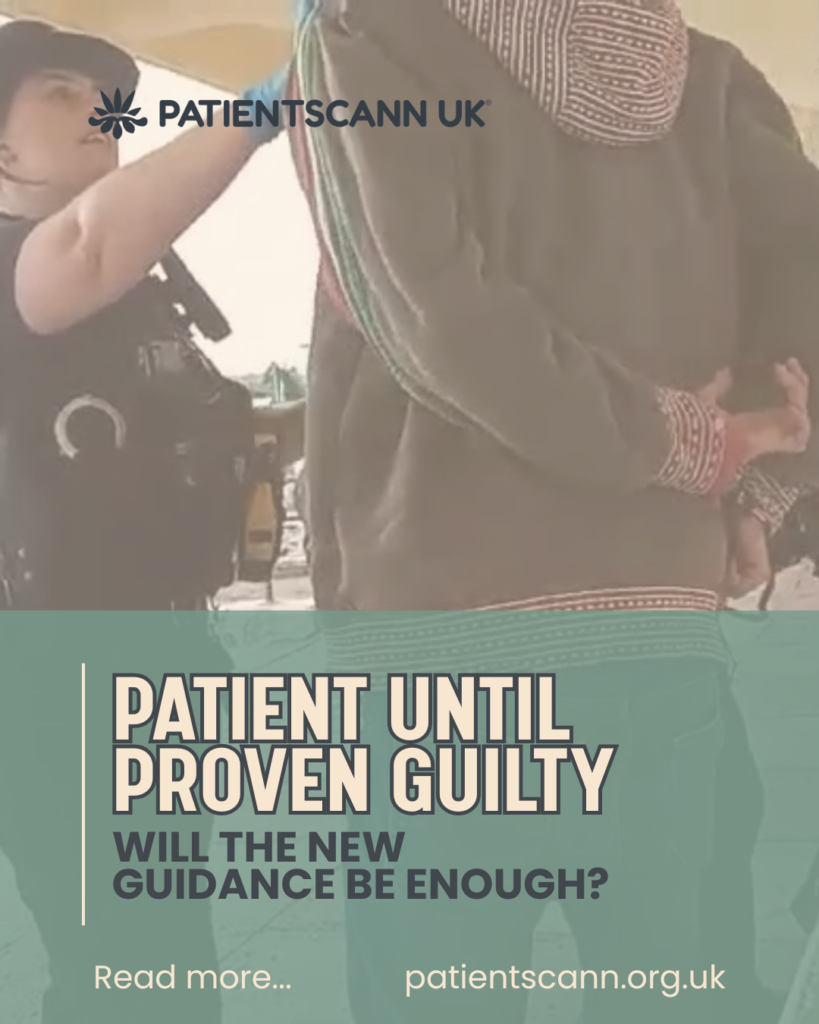
Earlier this week the National Police Chiefs’ Council (NPCC) issued updated guidance instructing police forces across the UK that medicinal cannabis patients should be treated as “patients first, suspects second” when encountered by officers. The guidance explicitly recognises that people in lawful possession of cannabis-based products for medicinal use should be assumed to be patients until proven otherwise, and clarifies that individuals with a valid prescription do not need to hold or present a Cancard, a privately-run card scheme that charges an annual fee and is not a legal requirement under UK law. This development represents a positive and overdue step in aligning policing practice with the legal reality established when cannabis-based medicines were moved to Schedule 2 of the Misuse of Drugs Regulations in November 2018… more than seven years ago. That regulatory change made it lawful to possess cannabis-based products for medicinal use when prescribed by an appropriate clinician. However, as a leading UK medical cannabis patient organisation, PatientsCann UK welcomes the guidance with cautious optimism, because guidance on paper does not automatically translate into consistent, informed practice on the streets. Why Guidance Is Not Enough Without Understanding It is an ongoing reality that many frontline officers still lack accurate awareness of the legal status of medical cannabis: Independent reports and guides have indicated that a significant proportion of officers may still be unaware that medical cannabis can be legally prescribed in the UK, even years after the law changed. (Curaleaf Clinic) Previous force guidance responses under Freedom of Information showed that some police forces did not have internal training or up-to-date briefing materials on this subject, and officers were still being expected to rely primarily on older Home Office circulars and their own discretion. (essex.police.uk) This gap between policy and practice raises serious concerns for patients. The NPCC’s intent, that every police officer should treat someone carrying lawful medical cannabis as a patient first, is commendable. But unless officers are consistently aware of the legal framework, understand how to verify lawful possession, and are trained to apply the guidance, the lived experience of patients may not improve significantly. Clarification and Practical Challenges The NPCC guidance confirms that a Cancard is not legally required for patients with a valid prescription, a vital clarification given the confusion that has surrounded this scheme. Cancard was originally introduced to assist officers in identifying individuals claiming medical need, particularly for those who may be waiting for a prescription or unable to afford one. However, it has always been a discretionary tool, not legal proof of lawful possession. Simply put: 🔹 A card indicating intent or condition does not change the law. That said, PatientsCann UK continues to support patients in carrying necessary documentation (prescription, dispensing label on original packaging, photo ID) where possible, because in the current reality, this often reduces friction in police encounters. Our Concern: Words vs Reality Our central worry remains this: Will the principle of “patients first, suspects second” become the norm, or will we continue to see a default attitude of “guilty until proven innocent”? Guidance is only as effective as the understanding and awareness of the officers applying it. Many patients still report experiences where officers: Misinterpret the law Lack confidence in recognising legitimate prescriptions Treat possession of medical cannabis as inherently suspicious …even when a patient is carrying evidence of lawfully prescribed medication. In some cases this results in needless stress, seizure of medicine, or unnecessary investigations. What PatientsCann UK Calls For To ensure the NPCC’s guidance truly benefits patients, we call for: Rapid, centralised training modules for all frontline officers on the legal status of medical cannabis and the practical application of this guidance. Clear internal briefings in every force that reinforce that lawful possession with a valid prescription is not an offence. Public-facing awareness efforts so patients know what documentation to carry and what their legal rights are. Monitoring and reporting mechanisms to track whether the guidance translates into improved outcomes for patients. We welcome the NPCC guidance as a necessary and positive affirmation of patients’ rights under the law. But we must be vigilant, not just about what the guidance says, but how it is understood and implemented in every police force across the UK. For too long patients have been left to explain something that should be common knowledge within policing. Now, more than ever, we must work together; patients, clinicians, law enforcement, and the wider public, to ensure that legal status and human dignity are recognised equally at every encounter. Mohammad Ismail “Ish” Wasway PatientsCann UK The UK’s Medical Cannabis Patient Organisation
Help Shape The Future of Medical Cannabis
At PatientsCann UK, we represent the voices of patients who rely on safe, effective, and regulated access to medical cannabis. Since its legalisation in 2018, many people have continued to face unnecessary barriers to treatment, from stigma and misinformation to the limited availability of NHS prescriptions. For thousands of patients, private prescriptions remain the only viable route to accessing the medicine they need. That’s why the Department of Health and Social Care’s “Private (non-NHS) Prescribing: Call for Evidence” is such an important opportunity. This review could influence how private prescribing works in the UK, including how cannabis-based medicines are accessed, regulated, and supported by clinicians. Why This Matters The call for evidence invites responses from across the healthcare system, including clinicians, prescribers, pharmacists, healthcare organisations, and patient groups. While the questions are primarily aimed at professionals, it is crucial that patients and carers also share their experiences. By contributing evidence and lived experience, we can help policymakers understand: How private prescribing supports patients who are unable to access NHS treatment. The challenges of affordability, continuity of care, and stigma in private medical cannabis access. The need for greater clinical education and confidence around prescribing cannabis-based medicines. The importance of protecting safe, regulated, and equitable access for all patients. Our Position PatientsCann UK believes that this review must:Protect the right of patients to access regulated medical cannabis safely and affordably.Promote fairness and consistency between NHS and private prescribing pathways.Address stigma and empower clinicians to prescribe based on evidence, not fear.Encourage more research, education, and evidence-based practice across the medical field. This consultation provides a rare chance to shape how the UK approaches private prescribing, and to ensure medical cannabis patients are not overlooked. How to Take Part Your experience is evidence — share it.The Private (non-NHS) Prescribing: Call for Evidence is now open to submissions from individuals and organisations with knowledge or experience of private prescribing. Visit: Private (non-NHS) Prescribing: Call for Evidence – GOV.UKDeadline: 11:59 pm, 4 November 2025 You do not need to answer every question, but you must select Submit at the end for your response to count. How Patients Can Encourage Healthcare Professionals You can play an important role in raising awareness of this consultation within your own care networks. Here are a few ways to help: Start the conversation. Mention the review to your prescribing clinician, pharmacist, or nurse and let them know the deadline. Many professionals may not yet be aware of it. Share the link. Send your clinic, GP practice, or specialist the official GOV.UK consultation page and encourage them to share it with colleagues. Speak to both sides. Whether your care is through a private medical cannabis clinic or the NHS, professionals across both systems can contribute valuable insight on access, patient safety, and clinical challenges. Explain why it matters. Let them know that evidence from healthcare professionals — especially those working with medical cannabis — can directly shape how government policy supports safer and fairer access for patients. Spread awareness. Share our post and tag your clinic, pharmacy, or medical organisation on social media to encourage wider participation. Your voice can help ensure that both patients and healthcare professionals are represented in this important review. Important Note This consultation is separate from the ACMD call for evidence on cannabis-based medicinal products, which focuses on clinical data and scheduling. Both reviews are crucial, and we encourage responses to each. Together, we can ensure that clinicians, patients, and organisations play a leading role in shaping an equitable and evidence-based future for medical cannabis access in the UK. 💚
PatientsCann UK Statement on the ACMD Review of Medical Cannabis
The Advisory Council on the Misuse of Drugs (ACMD) is reviewing cannabis-based products for medicinal use (CBPMs).
This Isn’t a Movement, It’s a Mess
A brutally honest call-in to the UK medical cannabis patient community, about ego, division, and why we’re our own worst enemy.

